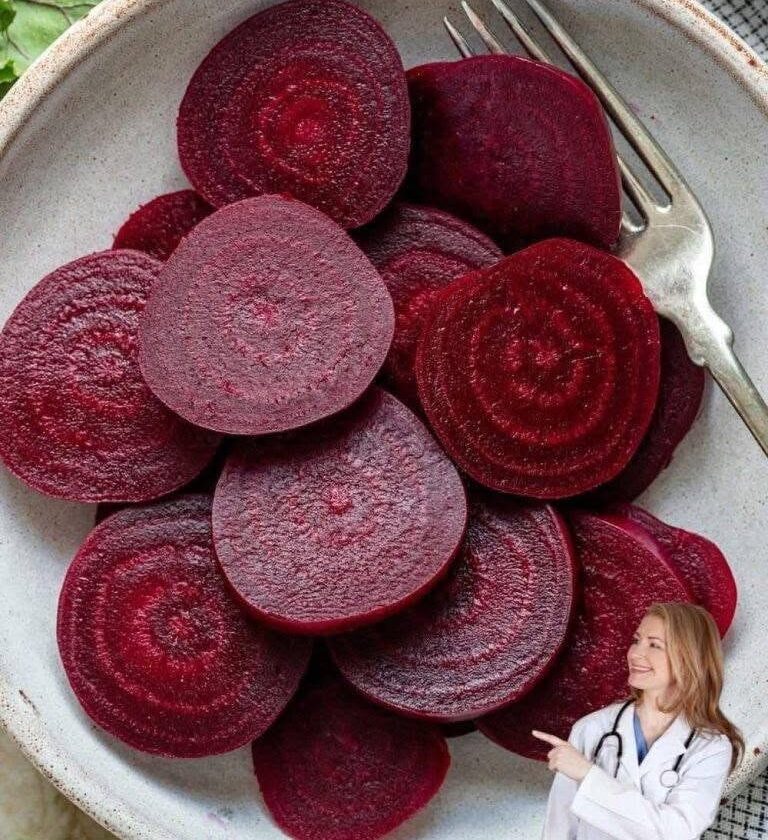
The headline “Beetroot as an alternative: what happens to your body when you eat beetroot, according to doctors” is partly based on real nutrition science—but often exaggerated in viral posts.
🥗 What beetroot actually does in your body
Beetroot is a nutrient-rich vegetable containing:
- Nitrates
- Fiber
- Folate (vitamin B9)
- Potassium
- Antioxidants (betalains)
❤️ 1. May support blood pressure
Beetroot’s natural nitrates can convert into nitric oxide in the body, which helps blood vessels relax. This may lead to:
- modest lowering of blood pressure in some people
🏃♂️ 2. Can improve exercise performance (slightly)
Some studies show beetroot juice may:
- improve blood flow
- slightly increase stamina in endurance activities
🧠 3. Supports circulation
Better blood flow may also support:
- heart health
- oxygen delivery to muscles and brain
🧬 4. Provides antioxidants
These help protect cells from oxidative stress, but this does not mean “detoxing” your body.
❌ What beetroot does NOT do
Despite viral claims, beetroot does NOT:
- “clean your arteries instantly”
- cure high blood pressure
- replace medication
- dramatically transform your health overnight
⚠️ Side effects (normal and harmless for most)
- Red or pink urine/stool (called beeturia)
- Mild stomach upset in some people if consumed in large amounts
🧠 Bottom line
Beetroot is a healthy food with modest cardiovascular benefits, especially for blood flow and blood pressure—but it’s not a miracle cure or “alternative medicine” replacement.
If you want, I can compare beetroot vs garlic vs ginger in terms of real heart-health benefits (that’s a common viral comparison online).