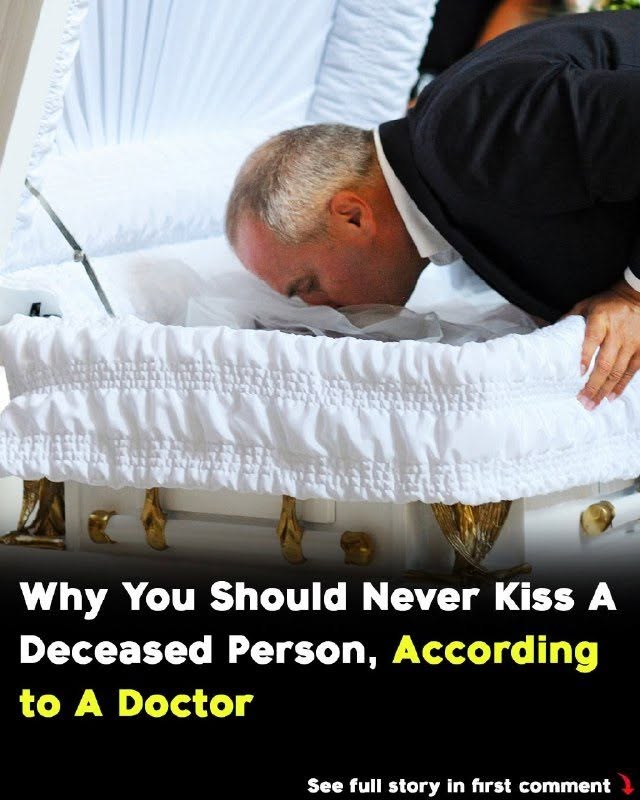
The headline “Doctor explains why you should never kiss a deceased person” is attention-grabbing, but the reality is more nuanced.
In general:
- For most people who die from natural causes, the risk of catching an infection from a brief kiss goodbye is very low.
- However, there are situations where healthcare professionals or funeral staff may advise against close contact with the body, especially if the person died from certain highly contagious infectious diseases or if there are body fluids present.
There are also practical reasons why families may be advised not to kiss a deceased person:
- The body begins to undergo natural changes after death, and bacteria normally present in the body start to multiply.
- Funeral homes or hospitals may have policies to protect families and staff.
- If an infectious disease was involved, extra precautions may be needed.
In many cultures, touching, kissing, or saying goodbye to a deceased loved one is a longstanding mourning practice. When there are no special infection-control concerns, healthcare providers or funeral directors often help families do this safely.
So the claim that you should “never” kiss a deceased person is too absolute. The appropriate advice depends on:
- The cause of death.
- Whether there is an infectious risk.
- Guidance from the medical team or funeral professionals.
If you’re in this situation, it’s best to follow the advice of the healthcare providers or funeral home caring for your loved one, as they’ll know whether any special precautions are necessary.