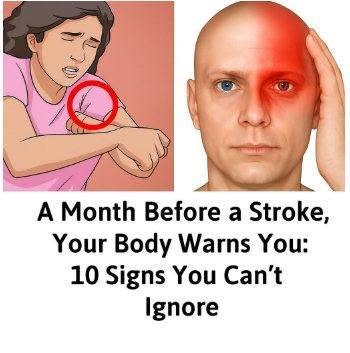
The headline “A month before a stroke, your body warns you: 10 signs not to ignore” is partly true, but it’s important to know that many strokes occur without clear warning signs, and symptoms can appear days, weeks, or just minutes before a stroke.
Here are 10 warning signs that may indicate an increased risk of stroke or a possible transient ischemic attack (TIA), often called a “mini-stroke”:
1. Temporary Weakness or Numbness
Sudden weakness or numbness in the face, arm, or leg, especially on one side of the body.
2. Brief Episodes of Slurred Speech
Difficulty speaking or understanding speech that comes and goes.
3. Sudden Vision Changes
Blurred vision, double vision, or temporary loss of vision in one or both eyes.
4. Unexplained Dizziness
Frequent episodes of dizziness, loss of balance, or coordination problems.
5. Sudden Severe Headaches
A new, intense headache with no obvious cause, particularly if it’s unlike previous headaches.
6. Short-Lived Confusion
Episodes of confusion, difficulty concentrating, or memory problems that occur suddenly.
7. Difficulty Walking
Unexpected trouble walking, stumbling, or feeling unsteady.
8. Facial Drooping
Temporary drooping or numbness on one side of the face.
9. Brief Fainting or Loss of Consciousness
Although less common, sudden unexplained fainting can sometimes be associated with conditions that increase stroke risk.
10. Repeated TIAs (Mini-Strokes)
A TIA causes stroke-like symptoms that usually resolve within minutes or hours. A TIA is a medical emergency because it significantly increases the risk of a major stroke in the near future.
Remember FAST
- Face: One side droops.
- Arms: One arm drifts downward.
- Speech: Slurred or strange speech.
- Time: Call emergency services immediately.
Important
These symptoms do not guarantee that a stroke will occur, and many can be caused by other conditions. However, sudden neurological symptoms should never be ignored. If someone experiences signs of a stroke or TIA, seek emergency medical care right away—early treatment can greatly improve outcomes and reduce the risk of permanent disability.