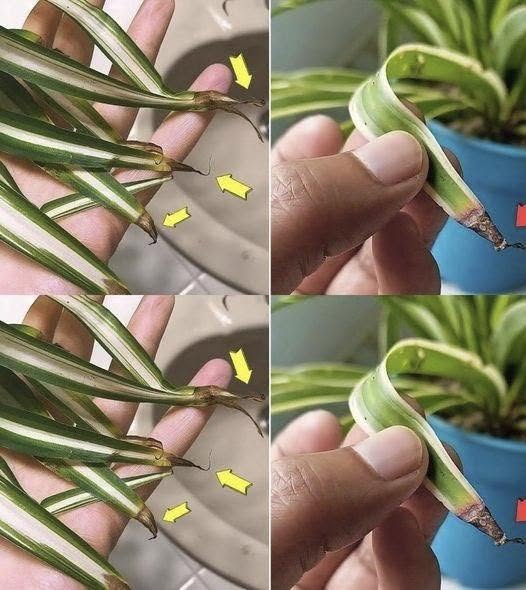
Brown tips on herbaceous plants are a symptom, not a disease. They usually indicate that the leaf tissue has dried out or been damaged. The most common causes are:
- Underwatering
- One of the most common causes.
- The soil becomes too dry, and the leaf tips dry out first.
- Overwatering
- Waterlogged soil can damage roots, preventing them from absorbing water properly.
- Leaves may turn yellow before the tips become brown.
- Low humidity
- Many tropical plants develop crispy brown tips in dry indoor air, especially during winter.
- Too much fertilizer
- Excess fertilizer can cause “fertilizer burn,” where salts accumulate in the soil and damage leaf tips.
- Flushing the soil with water and reducing fertilizer use can help.
- Poor water quality
- Some plants are sensitive to fluoride, chlorine, or high levels of dissolved salts in tap water.
- Using filtered, distilled, or rainwater may help for sensitive species.
- Too much direct sunlight or heat
- Intense afternoon sun or heat from radiators and heating vents can scorch leaf tips.
- Natural aging or physical damage
- Older leaves naturally die back, and accidental bumps or tears can leave brown ends.
What you can do
- Check the soil moisture before watering.
- Ensure the pot has good drainage.
- Increase humidity if the plant prefers moist air.
- Fertilize according to the plant’s needs rather than more frequently.
- Trim off brown tips with clean scissors if you don’t like their appearance, following the natural shape of the leaf.
If you tell me which plant you have (for example, basil, mint, peace lily, spider plant, or another herbaceous plant), I can help narrow down the most likely cause and suggest the best solution.