That headline is partly true, but also a bit exaggerated for clicks.
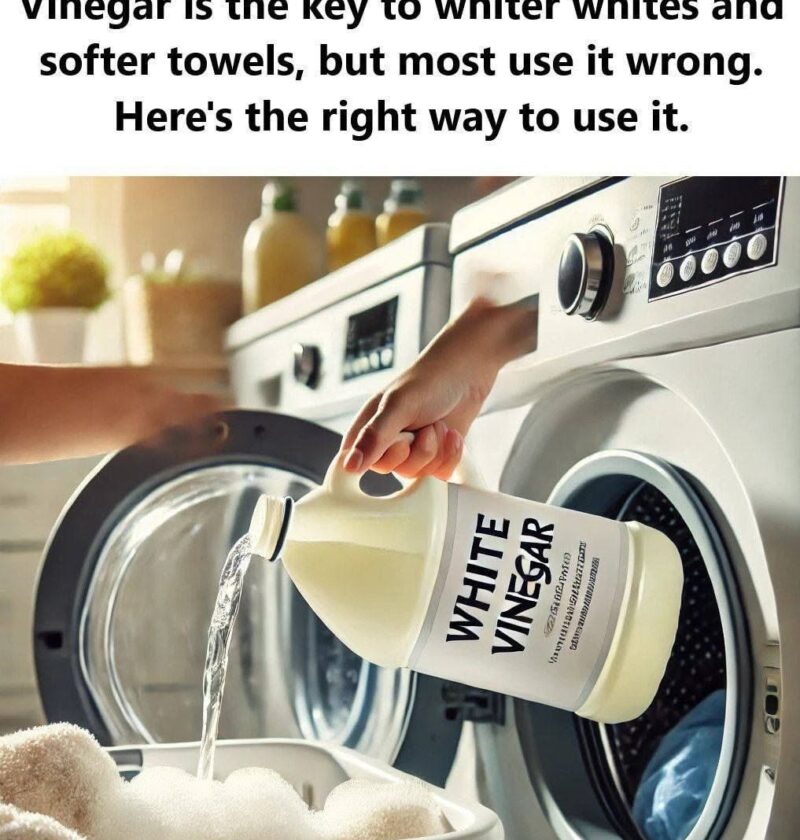
Vinegar (usually white vinegar) can help laundry in some situations—but it’s not a miracle “whitening or fabric-transforming” solution.
Here’s what’s real and how to use it properly:
🧺 What vinegar actually does in laundry
👍 Possible benefits
- Helps remove detergent buildup from clothes and towels
- Can reduce odors (like musty towel smell)
- May make fabrics feel softer (by removing residue)
- Helps brighten slightly dull whites over time
🚫 What it does NOT do
- ❌ Does not bleach clothes like real whitening agents
- ❌ Does not remove deep stains instantly
- ❌ Does not replace detergent
- ❌ Will not make clothes “brand new”
🧼 The correct way to use vinegar
✔️ For towels (softening + odor removal)
- Add ½ cup white vinegar to the fabric softener compartment
- Run a normal wash cycle
- Do NOT mix with bleach
✔️ For whitening maintenance (not stain removal)
- Use occasionally (once every few washes)
- Works best on already-clean but dull fabrics
✔️ For washing machine cleaning
- Run an empty hot cycle with 1 cup vinegar
- Helps remove buildup and odor inside the machine
⚠️ Common mistakes people make
- Using too much vinegar → can weaken fabric over time
- Mixing vinegar with bleach → creates toxic gas (dangerous)
- Expecting instant whitening → unrealistic
🧠 Bottom line
Vinegar is a useful laundry helper for odor and residue removal, not a true whitening agent. It works best as a maintenance tool, not a stain remover or bleach replacement.
If you want, I can show:
- how to get really white towels safely
- or best natural laundry hacks that actually work 👍