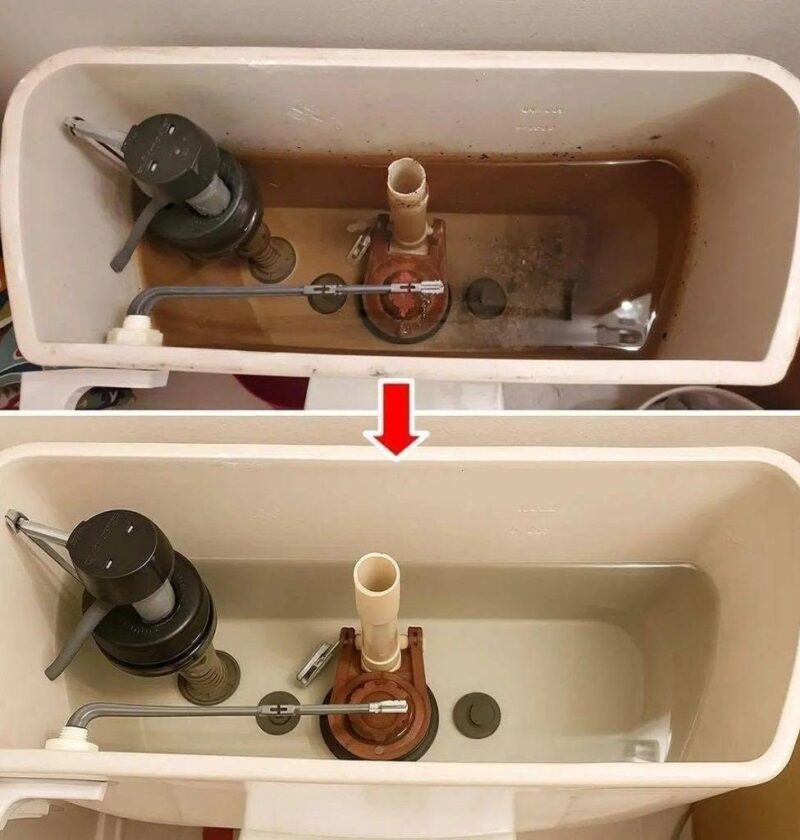
If by “toilet flush” you mean the toilet cistern (tank) or the flush mechanism, regular cleaning can improve its appearance and performance. If you mean the toilet bowl, the steps are a bit different.
Here’s a safe way to clean both:
Toilet bowl
- Apply a toilet bowl cleaner under the rim and around the bowl.
- Let it sit for 10–15 minutes (or according to the label).
- Scrub with a toilet brush, paying attention to the waterline and under the rim.
- Flush to rinse.
For hard water stains, a pumice stone designed for toilet cleaning can work on porcelain, but use it gently and only when both the stone and surface are wet.
Toilet cistern (tank)
- Turn off the water supply.
- Flush to empty most of the tank.
- Wipe the inside with a sponge or soft brush and a mild cleaner.
- If there are mineral deposits, use white vinegar on the affected areas, let it sit, then scrub gently.
- Turn the water back on and flush several times.
Flush button or handle
- Wipe with warm, soapy water or a disinfectant cleaner.
- Use a soft cloth to avoid scratching chrome or plastic finishes.
Avoid these common mistakes
- Don’t put dishwasher tablets or bleach tablets inside the cistern unless your toilet manufacturer specifically says they’re safe. They can damage rubber seals and other parts over time.
- Don’t mix bleach with vinegar or other cleaners, as this can produce hazardous gases.
- Avoid abrasive scouring pads on shiny surfaces.
A toilet that’s discolored from age or has damaged porcelain won’t usually look “like new,” but regular cleaning and removing mineral deposits can make a significant difference. If you have persistent rust or limescale stains, I can suggest the best cleaning method based on the type of stain.