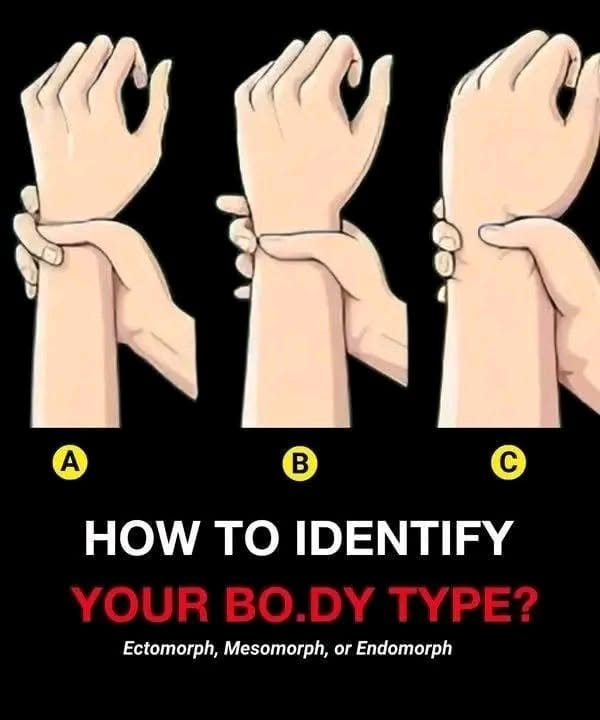
The idea of “body types”—ectomorph, mesomorph, endomorph—comes from an old system called somatotypes. It’s still popular online, but it’s an oversimplification of how real human bodies work.
🧠 What the three “body types” mean
1. Lean / “Ectomorph”
- Naturally slimmer build
- May find it harder to gain weight or muscle
- Often long limbs and narrow frame
👉 Reality: People just vary in metabolism, appetite, and activity—not a fixed category.
2. Athletic / “Mesomorph”
- Naturally more muscular appearance
- Gains muscle more easily
- Broader shoulders, balanced frame
👉 Reality: This usually reflects genetics + training habits, not a separate body “type.”
3. Larger / “Endomorph”
- Tends to store more body fat
- May gain weight more easily
- Softer or rounder body shape
👉 Reality: Fat storage is influenced by diet, hormones, sleep, and lifestyle—not a permanent label.
⚠️ What science says today
Modern health science does not support strict body-type categories. Instead, it focuses on:
- metabolism
- muscle mass
- fat distribution
- lifestyle habits
- genetics (as a spectrum, not boxes)
Your body can also change over time depending on:
- diet
- exercise
- stress
- age
🚫 Why the system is misleading
- People are rarely “pure” ecto/meso/endo
- It can create unnecessary labels or frustration
- It ignores how adaptable the human body is
This simplification is part of what psychologists call Body image perception
🧠 Bottom line
Body types are outdated categories, not medical facts. Your body is more like a changing spectrum shaped by habits and genetics—not a fixed label.
If you want, I can help you:
- identify your body traits more accurately
- or suggest diet + workout plans based on your goals 👍