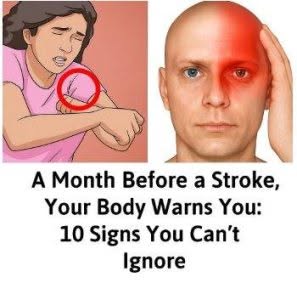
That headline is partly based on real symptoms, but it’s usually exaggerated into a “guaranteed warning list,” which is misleading.
A stroke happens when blood flow to the brain is blocked or reduced, affecting the Brain. Some people do experience warning signs before a major stroke, but many strokes happen suddenly with no clear long-term warning.
⚠️ Possible warning signs (may occur days or weeks before some strokes)
1. 🧠 Brief weakness or numbness
- Especially on one side of the body
2. 🗣️ Speech problems
- Slurred speech or trouble finding words
3. 👁️ Vision changes
- Blurred or double vision
- Temporary loss of vision in one eye
4. ⚖️ Dizziness or loss of balance
- Trouble walking or coordination issues
5. ⚡ Sudden severe headache
- Especially unusual or intense pain
6. 🖐️ Arm or face weakness
- Drooping on one side of the face
7. 😵 Confusion
- Difficulty understanding simple things
8. 💓 Brief mini-strokes (TIAs)
- Symptoms that come and go quickly (very important warning sign)
9. 💤 Unexplained fatigue or weakness
- Not specific, but sometimes reported
10. 🔁 Repeated short episodes of symptoms
- Temporary “on and off” neurological issues
🚨 Critical reality check
- These signs are not specific to stroke
- Many people with these symptoms do not go on to have a stroke
- Some strokes occur without any warning at all
🧠 What matters most
A major warning event is a TIA (transient ischemic attack)—often called a “mini-stroke.” This is a medical emergency, even if symptoms disappear.
🚑 Emergency signs (FAST rule)
Seek immediate help if you notice:
- Face drooping
- Arm weakness
- Speech difficulty
- Time to call emergency services
🧭 Bottom line
There can be warning signs before some strokes, but the idea of a reliable “10 signs a month before” is not medically accurate. Stroke risk is unpredictable, and sudden symptoms should always be treated seriously.
If you want, I can also explain:
- 🧠 how to reduce stroke risk in daily life
- ⚖️ difference between stroke and TIA
- 💊 main medical risk factors doctors watch for