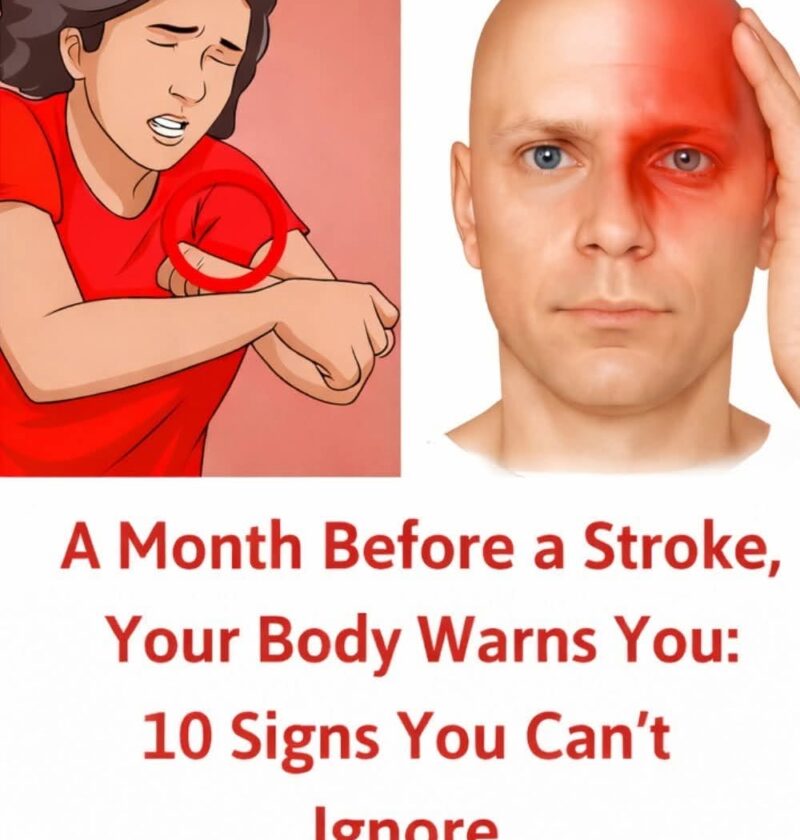
That phrase is another clickbait health hook. It implies there’s a reliable “1 month warning,” but medically that’s not how strokes work.
A stroke is a Stroke, and while some people do have warning signs, they are not predictable by a fixed timeline like “one month before.”
⚠️ What warning signs can happen (sometimes before a stroke)
Some people experience short episodes called TIAs (mini-strokes):
1. Sudden weakness or numbness
- Face, arm, or leg (often one side)
2. Speech problems
- Slurred speech
- Trouble understanding or speaking
3. Vision changes
- Blurry vision
- Temporary loss of vision in one eye
4. Balance problems
- Dizziness
- Difficulty walking or coordination issues
5. Severe unusual headache
- Sudden and intense, especially if different from normal headaches
🚨 Important reality check
- These symptoms may occur minutes, days, or sometimes weeks before, but not in a predictable “1 month warning window.”
- Some strokes happen with no warning at all.
🧠 The real emergency rule (FAST)
If symptoms happen suddenly:
- Face drooping
- Arm weakness
- Speech difficulty
- Time to seek emergency help immediately
🚫 Why this headline is misleading
- It simplifies a complex medical condition
- It implies a guaranteed warning period (which doesn’t exist)
- It mixes real symptoms with fear-based storytelling
🧠 Bottom line
Your body may sometimes give short warning signs, but there is no reliable “one month before stroke” symptom list. Any sudden neurological change should always be taken seriously immediately.
If you want, I can show:
- early risk factors for stroke (what actually increases risk over time)
- or how to tell stroke vs migraine vs anxiety symptoms 👍