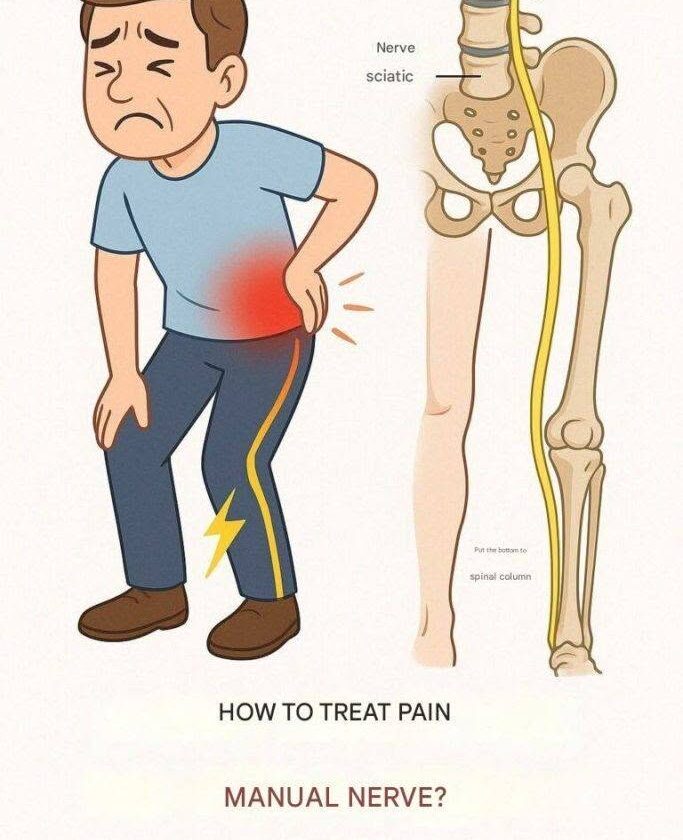
Sciatica pain usually comes from irritation of the sciatic nerve (often from the lower back or tight glute muscles). Gentle movement is often more helpful than rest—but the key is slow, pain-free stretching, not forcing anything.
Here are 3 commonly recommended, evidence-based exercises that can help reduce sciatic-type leg pain:
🧘♂️ 1. Knee-to-chest stretch
Helps relax the lower back and reduce nerve tension.
How to do it:
- Lie on your back
- Bring one knee toward your chest
- Hold behind your thigh or shin
- Keep the other leg straight or bent for comfort
- Hold 20–30 seconds, switch sides
Why it helps:
Gently opens the lower back and reduces pressure on irritated nerves.
🧍♂️ 2. Piriformis stretch (seated or lying)
The piriformis muscle can irritate the sciatic nerve when tight.
How to do it (lying version):
- Lie on your back
- Cross your right ankle over your left knee
- Pull your left thigh toward your chest
- You should feel a stretch in your right buttock
- Hold 20–30 seconds, switch sides
Why it helps:
Relieves tightness in the deep glute muscles that often press on the sciatic nerve.
🧎♂️ 3. Cat-cow stretch
Improves spinal mobility and reduces stiffness.
How to do it:
- Get on hands and knees
- Inhale: arch your back (look slightly up)
- Exhale: round your spine (tuck chin)
- Repeat slowly for 8–10 cycles
Why it helps:
Keeps the spine moving and reduces pressure buildup in the lower back.
⚠️ Important safety notes
Stop if you feel:
- Sharp or worsening leg pain
- Tingling that spreads further down the leg
- Numbness or weakness
And avoid:
- Aggressive hamstring stretching early on (can worsen symptoms in some cases)
- Heavy lifting or twisting while in pain flare-up
🧠 Simple takeaway
Sciatica responds best to:
gentle mobility + nerve-friendly stretching + gradual strengthening
If you want, I can also give you a 5–10 minute daily routine specifically designed for sciatica relief (morning or bedtime version).