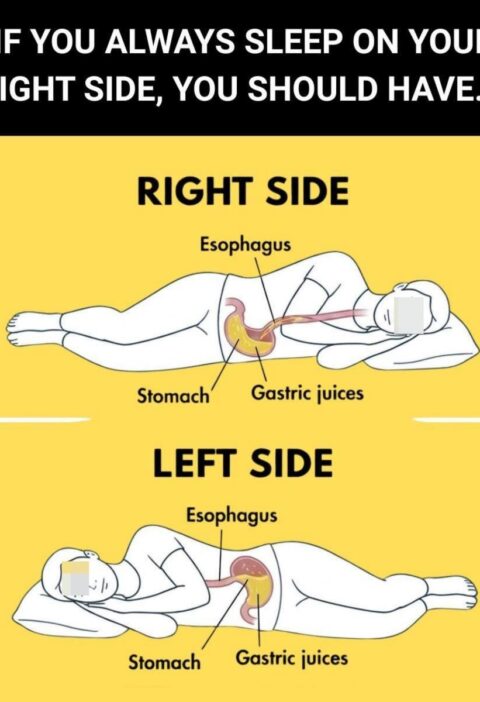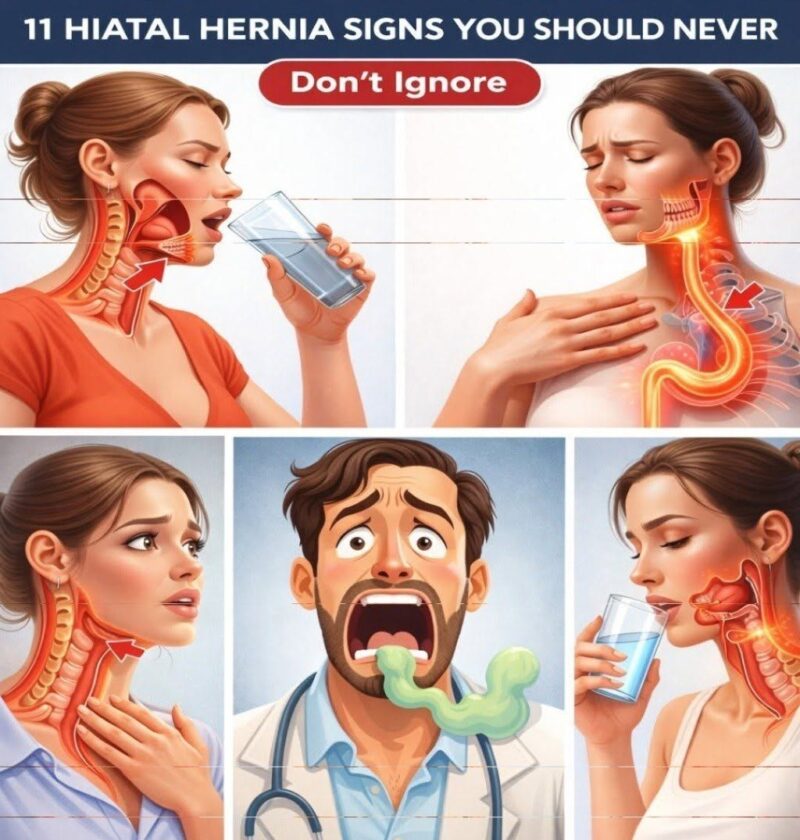
A hiatal hernia occurs when part of the stomach pushes upward through the diaphragm into the chest. Many people with a hiatal hernia have no symptoms at all, but some experience symptoms related to acid reflux.
10 signs and symptoms that can occur
- Heartburn
- A burning sensation in the chest, especially after meals or when lying down.
- Acid reflux
- Stomach acid backing up into the esophagus.
- Regurgitation
- A sour or bitter-tasting fluid coming into the mouth.
- Difficulty swallowing
- A feeling that food is getting stuck.
- Chest discomfort
- Sometimes mistaken for heart-related pain.
- Frequent burping
- Excessive belching may occur in some people.
- Feeling full quickly
- Early satiety after eating small amounts.
- Nausea
- Some people experience stomach upset or queasiness.
- Chronic cough or throat irritation
- Reflux can irritate the throat and airways.
- Hoarseness
- Stomach acid reaching the throat can affect the voice.
When to seek medical attention
Seek prompt medical care if you experience:
- Severe chest pain
- Difficulty breathing
- Vomiting blood
- Black, tarry stools
- Difficulty swallowing that is worsening
Because chest discomfort can have many causes, including serious heart conditions, it should not be assumed to be a hiatal hernia without proper evaluation.
How hiatal hernias are managed
Treatment may include:
- Eating smaller meals
- Avoiding lying down soon after eating
- Weight management, if appropriate
- Medications to reduce stomach acid
- Surgery in selected cases
Bottom line
Many hiatal hernias cause no symptoms. When symptoms do occur, they are often related to acid reflux, such as heartburn, regurgitation, and difficulty swallowing. If symptoms are persistent, severe, or accompanied by warning signs, it’s important to seek medical evaluation.