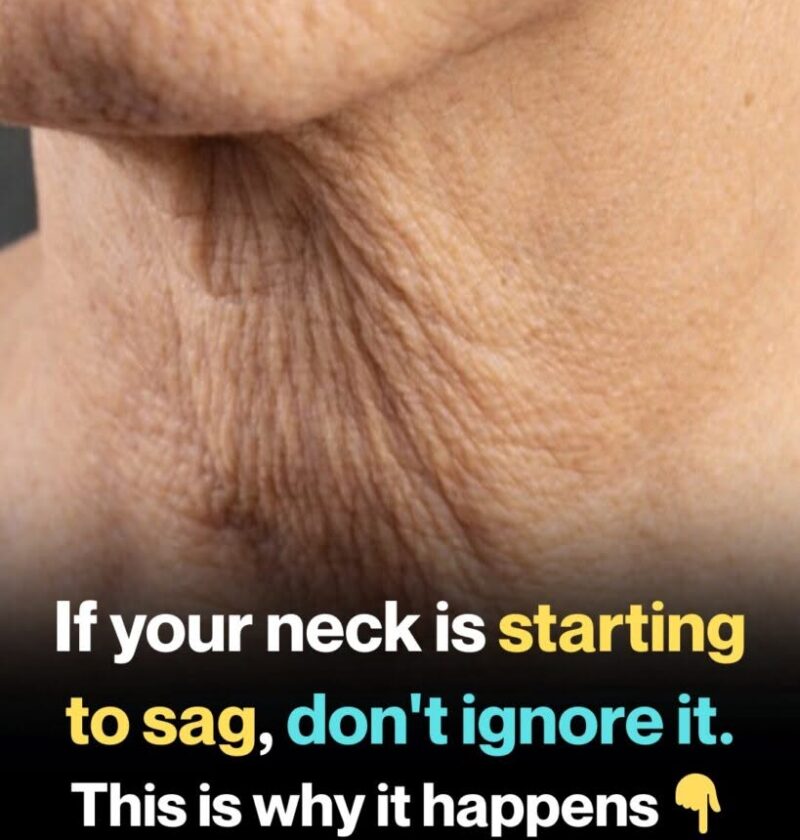
That headline is generally accurate, though it’s written to attract clicks. A more balanced version would be:
Why Neck Skin Changes With Age—and What May Help
The underlying idea is supported by evidence:
- As you age, your skin produces less collagen and elastin, making it thinner and less elastic.
- Fat distribution changes, muscles can weaken, and repeated movements, sun exposure, smoking, and genetics can all contribute to sagging neck skin.
What may help depends on the severity:
- Daily sunscreen to reduce further sun damage.
- Retinoids (such as prescription tretinoin or over-the-counter retinol) to improve collagen production over time.
- Moisturizers to improve the appearance of the skin, though they won’t tighten it significantly.
- Maintaining a healthy weight and avoiding smoking.
- For more noticeable sagging, dermatologic procedures (such as laser treatments, radiofrequency, ultrasound, or surgery) are generally more effective than creams alone.
The key takeaway is that neck skin sagging is a normal part of aging, and while some treatments can improve its appearance, no cream or home remedy can completely reverse it.