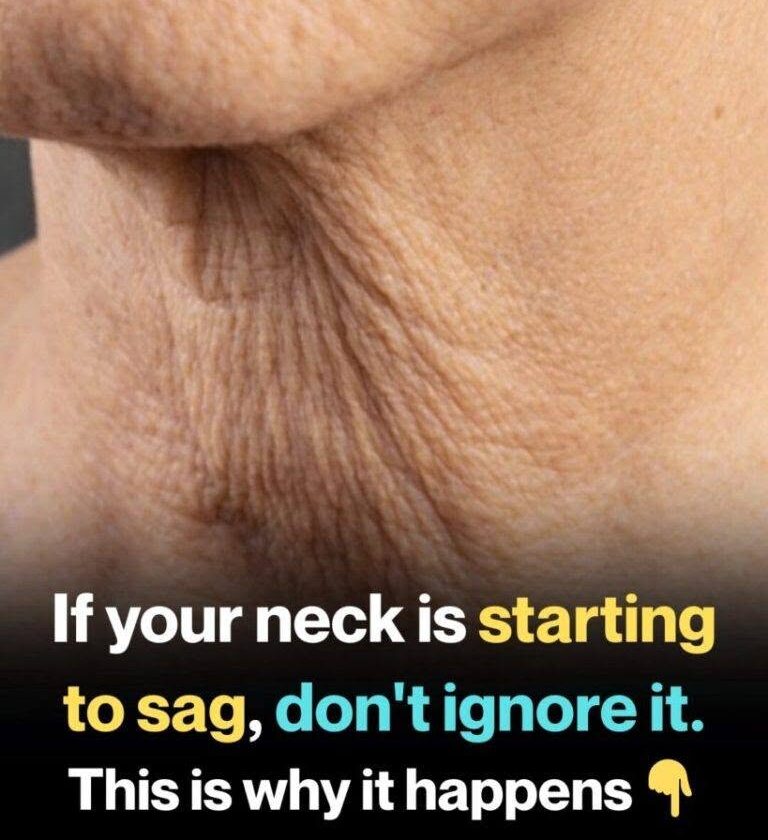
As people age, neck skin can begin to sag due to a combination of natural biological changes and lifestyle factors.
Why neck skin sags
1. Loss of collagen and elastin
Collagen provides structure and strength, while elastin helps skin spring back after stretching. Production of both decreases with age, causing skin to become thinner and less firm.
2. Changes in fat and muscle
The distribution of fat beneath the skin changes over time, and the neck muscles can weaken, making loose skin more noticeable.
3. Sun exposure
Ultraviolet (UV) radiation accelerates the breakdown of collagen and elastin, contributing to premature aging of the neck.
4. Gravity
Over many years, gravity gradually pulls on skin and underlying tissues, contributing to sagging.
5. Genetics
Some people are naturally more prone to developing loose neck skin than others.
What you can do about it
Protect your skin from the sun
- Use a broad-spectrum sunscreen daily on the neck as well as the face.
- Wear protective clothing or seek shade when possible.
Maintain a healthy lifestyle
- Avoid smoking.
- Eat a balanced diet rich in fruits, vegetables, and adequate protein.
- Stay physically active.
- Get sufficient sleep.
Use evidence-based skincare
Products containing ingredients such as retinoids (vitamin A derivatives) may help improve skin texture and stimulate collagen production over time.
Consider professional treatments
Depending on the severity of sagging, options may include:
- Radiofrequency or ultrasound-based skin tightening
- Microneedling
- Injectable treatments in selected cases
- Surgical neck lift procedures for more significant sagging
What to expect
No cream or exercise can completely reverse significant neck sagging. However, good sun protection, healthy habits, and appropriate treatments can often improve skin appearance and slow further changes.
If you’re interested, I can also explain the difference between a “turkey neck,” a double chin, and loose neck skin, since they have different causes and treatments.