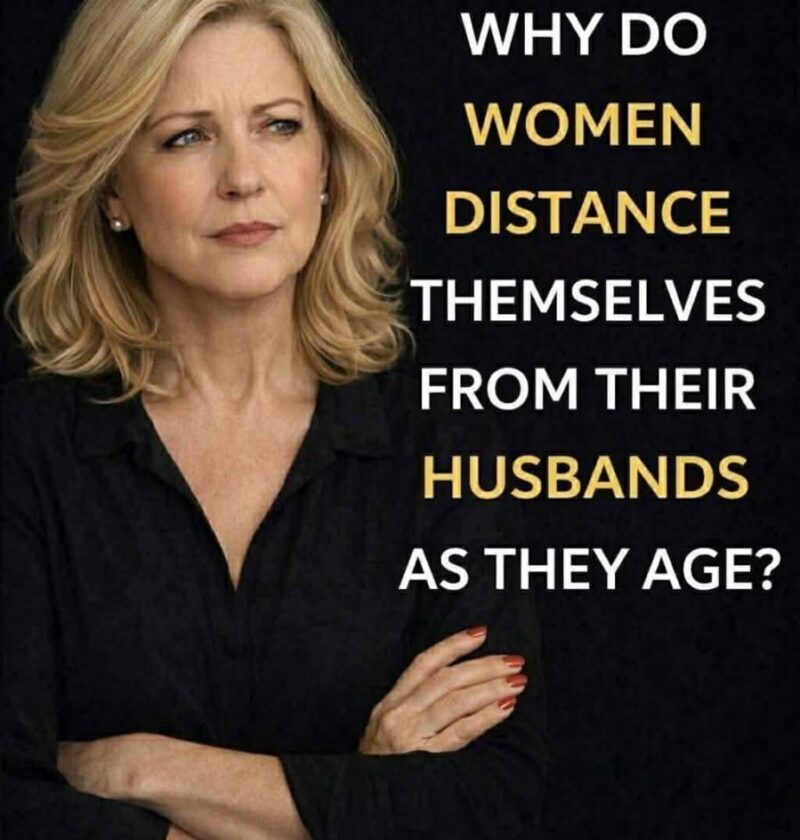
That headline is a generalization and often oversimplifies a very complex topic. Not all women distance themselves from their husbands with age, and when distance does happen in relationships, it’s usually about relationship dynamics, not gender or aging alone.
Here are some real, research-based reasons emotional or physical distance can develop in long-term marriages:
💬 1. Unresolved communication issues
Over time, small misunderstandings or unmet needs can build up if they’re not addressed.
🧠 2. Emotional burnout or feeling unheard
If one partner feels like their emotions, opinions, or needs are consistently dismissed, they may withdraw emotionally.
🔄 3. Life transitions and stress
Aging often brings:
- children growing up
- career changes or retirement
- health concerns
- financial pressure
These shifts can change how partners connect.
❤️ 4. Changing emotional needs
People naturally evolve. Sometimes:
- interests change
- priorities shift
- emotional needs become different
If couples don’t adapt together, distance can grow.
💤 5. Intimacy and routine fatigue
Long-term routines can reduce emotional and physical intimacy if effort isn’t maintained on both sides.
⚖️ 6. Unequal emotional or household load
If one partner feels they carry most responsibilities (emotional or practical), resentment can build over time.
🧠 Important reality check
- This is not specific to women
- Men can and do experience the same emotional distancing
- It’s about relationship patterns, not aging or gender biology
💡 Healthier framing
Instead of “why do women distance,” a more accurate question is:
“What causes emotional distance in long-term relationships, and how can couples prevent it?”
And the answer is usually:
- communication
- appreciation
- shared effort
- emotional responsiveness
If you want, I can break down the early warning signs of emotional disconnection in marriage vs normal relationship phases, which is what these viral posts are usually hinting at.