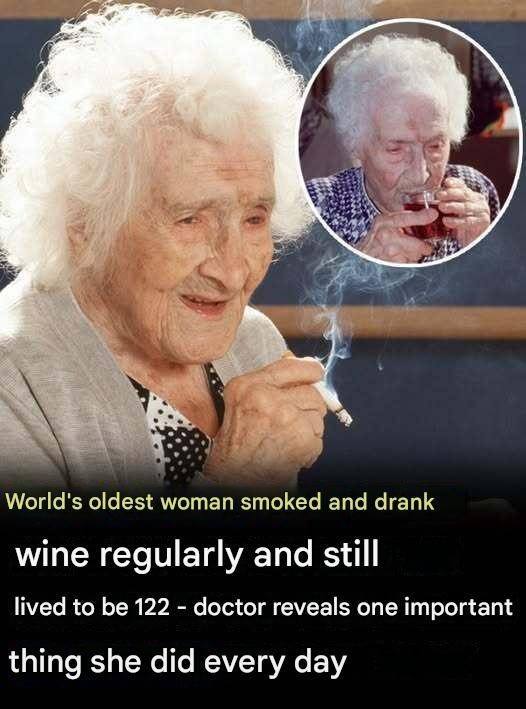
The woman you’re referring to is almost certainly Jeanne Calment, who lived to 122 years and 164 days, the longest confirmed human lifespan on record.
Her story has been studied extensively, but it’s important to separate verified facts from the more romanticized “longevity secrets” that often circulate online.
🧬 What we actually know about her habits
1) She stayed active—but not in a “fitness routine” way
- Walked regularly in earlier life
- Continued light movement into old age
- Lived independently for most of her life
2) She had a fairly relaxed attitude toward food
Reports suggest:
- She ate moderate portions
- Enjoyed a variety of foods rather than strict dieting
- Frequently mentioned enjoying chocolate
But there’s no evidence of a “special diet” responsible for her longevity.
3) She was socially and mentally engaged
- Lived in Arles, France, her whole life
- Maintained social connections into very old age
- Had a stable, low-stress lifestyle compared to modern urban life
4) Genetics likely played a major role
This is the most important factor:
- Extreme longevity is strongly linked to genetic luck
- Her family reportedly had relatively long-lived relatives
⚖️ The reality behind the “longevity myth”
Many viral posts claim she:
- drank olive oil daily
- avoided stress completely
- followed strict routines
These are mostly exaggerations or unsupported additions to her real biography.
🧠 What researchers take from her case
Instead of “10 secret habits,” scientists usually conclude:
- Longevity is multifactorial (genes + environment + chance)
- Moderate lifestyle habits help, but don’t guarantee extreme lifespan
- Exceptional cases are not templates for average outcomes
Bottom line
Jeanne Calment lived an unusually long life, but there is no single surprising habit that explains it—her longevity is best understood as a combination of genetics, stable living conditions, and ordinary healthy behaviors rather than a secret routine.
If you want, I can break down what does consistently predict longer life in modern studies (that part is actually very actionable and evidence-based).