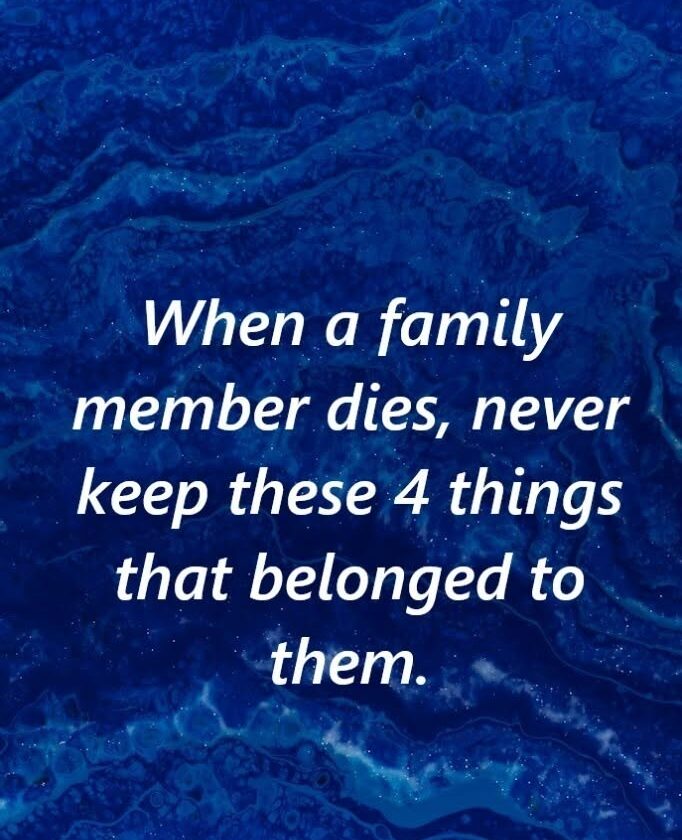
That headline is an opinion, not a psychological rule. There is no evidence-based list of seven items that everyone “should” get rid of after a loved one dies.
People grieve in very different ways. Some find comfort in keeping belongings, while others prefer to donate or discard them. Neither approach is inherently healthier.
Here are some considerations that many grief counselors suggest:
- Keep items that bring comfort or meaningful memories. A favorite sweater, letters, photos, or jewelry can be deeply comforting.
- Let go of items you don’t need or that cause ongoing distress. Donating usable belongings can honor your loved one’s memory if it feels right to you.
- Take your time. Unless there are legal or practical deadlines, there’s usually no need to rush decisions about possessions.
- Ask for help if it’s overwhelming. Family members, trusted friends, or a grief counselor can help you sort through belongings.
The idea that getting rid of certain possessions is automatically “an act of self-love” is a personal viewpoint, not a universal truth. For some people, keeping cherished items is part of healthy grieving; for others, letting them go brings peace.
If you’re dealing with the loss of someone close, it’s okay to move at your own pace. There’s no “correct” timeline or checklist for deciding what to keep or what to release.