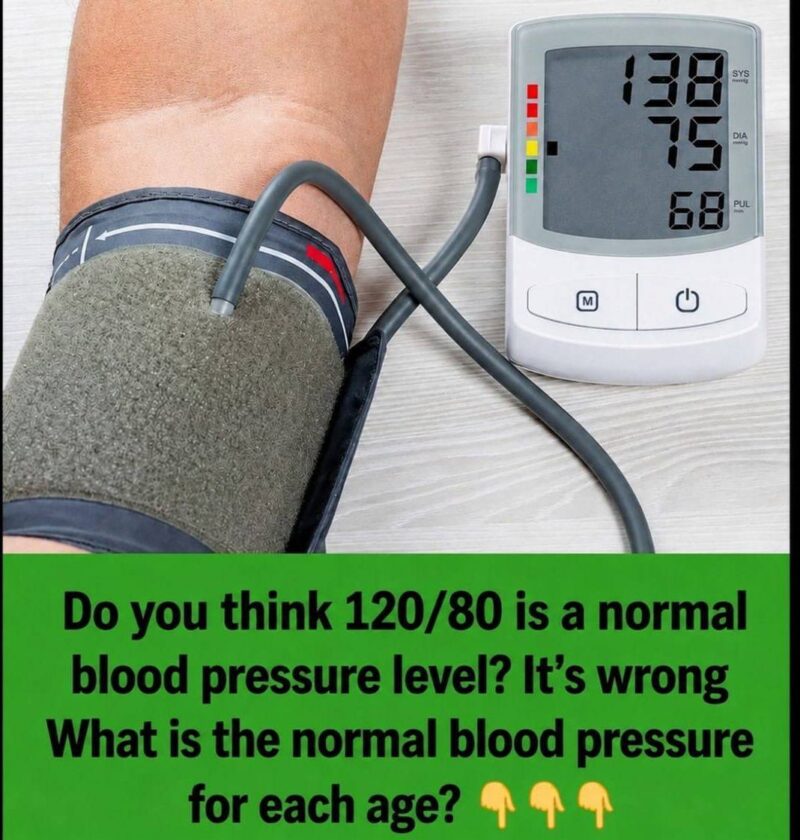
Blood pressure doesn’t have completely different “normal” values for every single age, but it does shift slightly across childhood, teens, and adulthood. Doctors mainly compare readings to age-appropriate ranges and overall health.
Blood pressure is written like: systolic / diastolic (e.g., 120/80 mmHg).
🩺 Normal Blood Pressure by Age (general guide)
👶 Children (1–12 years)
Normal varies by height/age, but roughly:
- Around 90/60 to 110/70 mmHg
- Lower than adults is normal
🧑 Teens (13–18 years)
- Normal: about 100/60 to 120/80 mmHg
- By late teens, adult range applies
🧑 Adults (18–59 years)
- Normal: below 120/80 mmHg
- Ideal range: ~110–120 / 70–80
🧓 Older adults (60+ years)
- Normal: still under 120/80 if healthy
- Slightly higher systolic (top number) can happen with age:
- Often around 120–130 / 70–80
- Doctors may still treat anything consistently ≥130/80 as high depending on risk factors
⚠️ When it’s considered high or low
High blood pressure (hypertension)
- 130/80 mmHg or higher (stage 1)
- Can increase risk of heart disease and stroke
Low blood pressure (hypotension)
- Below 90/60 mmHg
- May cause dizziness or weakness in some people
⭐ Key takeaway
- The “safe target” for most people is around 120/80 or lower
- Age matters less than overall health, symptoms, and trends over time
If you want, I can:
- explain why the top and bottom numbers matter
- or help you interpret a specific blood pressure reading you have 👍