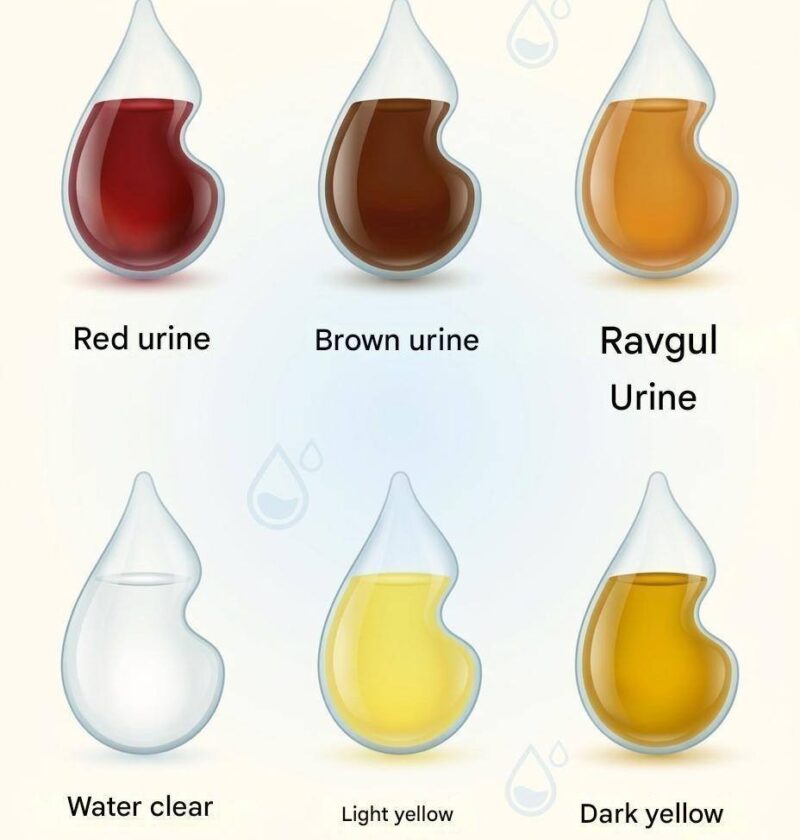
The color of your urine can give useful clues about hydration and sometimes health, but it’s not a diagnosis by itself. Here’s a simple guide:
💧 Clear to pale yellow (ideal)
- Usually means well hydrated
- Normal range when you’re drinking enough fluids
🌼 Dark yellow / amber
- Common sign of dehydration
- Your kidneys are conserving water
- Often improves after drinking more fluids
🍯 Honey / brownish yellow
- More severe dehydration possible
- Can also be caused by certain foods, vitamins (especially B-complex), or medications
🟠 Orange
- Could be dehydration
- Sometimes linked to liver or bile issues
- Certain medicines can also cause this color
🩷 Pink or red
- May come from foods like beetroot or berries
- But it can also indicate blood in urine, which should be checked
- Possible causes include infection, stones, or other urinary issues such as a Urinary tract infection
🟢 Blue or green (rare)
- Often due to dyes, foods, or medications
- Very rarely linked to specific medical conditions or bacteria
🟤 Dark brown / cola-colored
- Can be severe dehydration
- Sometimes related to liver problems or muscle breakdown (needs medical attention if persistent)
⚠️ When to pay attention
You should consider medical advice if:
- Color change lasts more than 1–2 days without clear reason
- You see blood or persistent pink/red urine
- You have pain, burning, fever, or strong odor
- Urine is consistently dark despite drinking water
Bottom line
Most urine color changes are harmless and related to hydration, diet, or vitamins, but persistent unusual colors—especially red, orange, or brown—are worth checking out.
If you want, I can turn this into a quick “color chart” image-style guide or explain what smell and frequency of urination can also indicate.