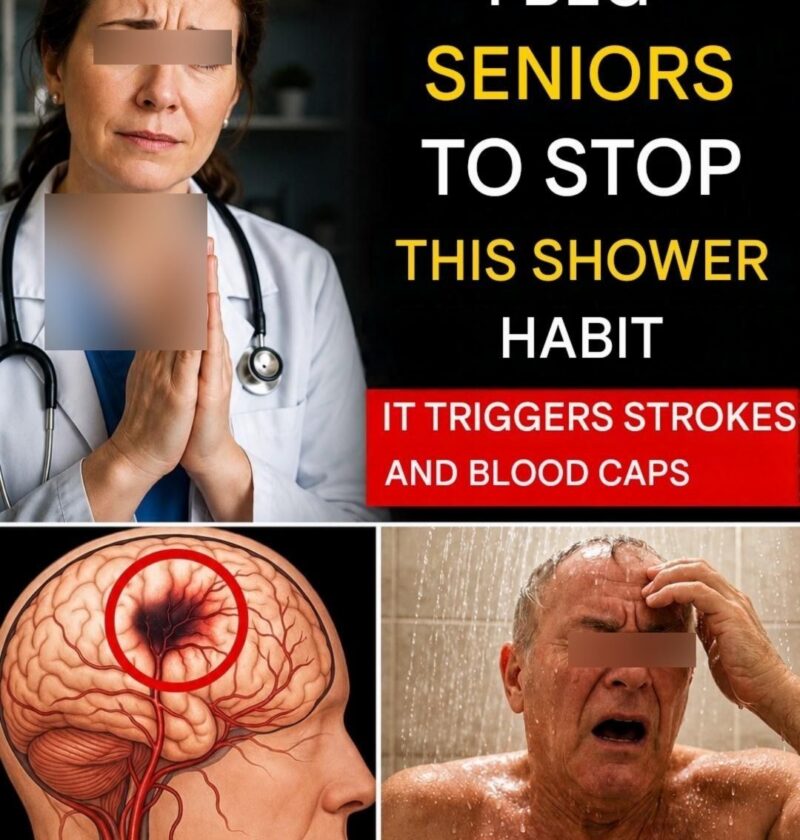
That headline is another fear-based clickbait claim, and it oversimplifies how strokes actually happen.
🧠 First: what a stroke really is
A stroke (or Stroke) occurs due to:
- blocked artery (ischemic stroke) or
- bleeding in the brain (hemorrhagic stroke)
It is driven by long-term risk factors like:
- high blood pressure
- diabetes
- smoking
- high cholesterol
- atrial fibrillation
A shower habit alone does not suddenly create a stroke risk overnight in a healthy person.
🚿 Where this claim usually comes from (the small “truth” inside it)
Some articles are likely referring to very specific situations, such as:
1. Very hot showers in vulnerable people
Hot water can:
- temporarily lower blood pressure
- cause dizziness or fainting in some seniors
In rare cases, a fall or sudden cardiovascular strain could be dangerous—but this is not the same as “causing a stroke.”
2. Temperature shock (extreme contrast)
Rapid switching between very hot and very cold water may:
- briefly affect blood pressure and heart rate
- stress the cardiovascular system in high-risk individuals
But again: no strong evidence it directly triggers stroke in healthy people.
3. Underlying high-risk conditions
The real risk is in people who already have:
- uncontrolled hypertension
- heart disease
- previous stroke or TIA
For them, any sudden physiological stress (including hot baths, dehydration, or standing up quickly) may be more risky—but it’s still indirect.
🚫 What is misleading in the headline
- “Shower habit increases stroke risk overnight” → not supported by clinical evidence
- implies a direct cause-and-effect → false
- ignores major established stroke risk factors → misleading framing
🧠 Bottom line
There is no common shower habit that directly increases stroke risk in healthy people. At most, extreme heat or sudden blood pressure changes may be a minor trigger in already high-risk individuals, not a cause.
If you want, I can break down the real top preventable stroke risks doctors actually focus on—that list is very different from viral health warnings.