Recipe

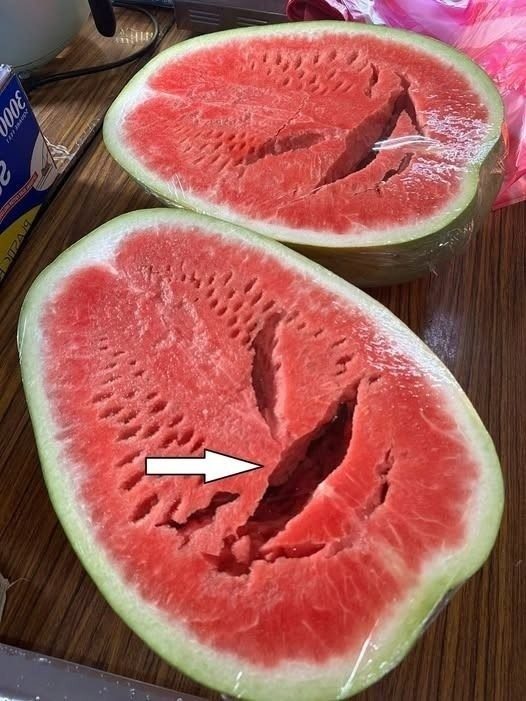
That’s another classic clickbait-style warning. Seeing “cracks” or unusual lines inside a watermelon is usually **not dangerous by itself**, and it definitely does *not* automatically mean you must stop eating it. ### What it can actually mean: * **Normal fiber pattern:** Watermelons sometimes develop natural internal “cracks” or white streaks in the flesh. * **Growth stress:** Rapid growth, uneven watering, or temperature changes can create internal splits. * **Overripe fruit:** Very ripe melons can have softer, slightly separated flesh areas. * **Varietal traits:** Some types naturally have more fibrous or segmented texture. ### When you *should* throw it away: Only if you notice real spoilage signs like: * Sour or fermented smell * Slimy texture * Mold (white/green/black fuzz) * Bubbling or fizzy juice (sign of fermentation) ### Bottom line Internal cracking alone is usually just a **cosmetic or growing-condition issue**, not a safety warning. If you want, you can describe what yours looked like—I can tell you whether it’s normal or actually spoiled.

That line is a clickbait health scare, not a real food safety rule.

If you cut open a watermelon and see “cracks,” here’s what it usually means in reality:

🍉 Most common causes (and they’re harmless)

  • Natural growth stress: Uneven watering or temperature changes can cause the flesh to form internal splits.
  • Overripeness: Very ripe watermelons can start to separate slightly inside.
  • Variety differences: Some watermelons naturally have more fibrous or “lined” textures.
  • Seed spacing / internal structure: The fruit grows in segments, so lines or gaps can look like cracks.

⚠️ When it is unsafe

You should only avoid eating it if you notice actual spoilage signs like:

  • Sour, fermented smell
  • Slimy or mushy texture
  • Visible mold
  • Fizzy or bubbling juice (fermentation)

✅ Bottom line

“Cracks inside a watermelon” is usually just a texture or growth pattern issue, not a danger signal. The dramatic “STOP EATING IT IMMEDIATELY” phrasing is designed to grab attention, not give accurate food safety advice.

If you want, you can describe what you saw or even share a photo—I can help you judge it more precisely.

Leave a Reply

Your email address will not be published. Required fields are marked *