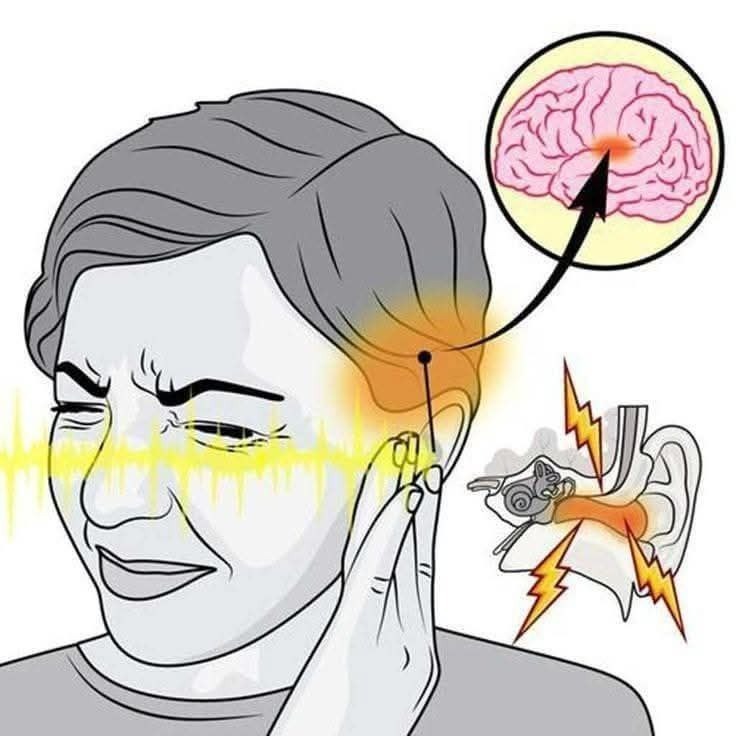
Ringing in the ear is most commonly explained by a condition called tinnitus—and the “surprising” part is that in many cases, the sound isn’t coming from outside at all. It’s generated by changes inside your hearing system and how your brain interprets sound.
🔊 What “ringing in the ear” actually is
This sensation (ringing, buzzing, hissing, or whistling) is usually called Tinnitus.
It can happen in one ear or both, and the sound may be:
- High-pitched ringing
- Low buzzing or humming
- Pulsing (like a heartbeat)
- Static or wind-like noise
🧠 The surprising cause: your brain filling in silence
Your ears constantly send sound signals to the brain. When those signals change—due to damage, blockage, or stress—the brain may “compensate” by increasing its sensitivity.
In simple terms:
The brain turns up the “volume” when it thinks sound is missing.
That increased activity can be perceived as ringing.
🧩 Common triggers
Tinnitus isn’t a disease on its own—it’s usually a symptom of something else, such as:
- 🔊 Loud noise exposure (headphones, concerts, machinery)
- 👂 Earwax blockage
- 🧓 Age-related hearing changes
- 💊 Certain medications
- 🩸 Blood flow changes (in pulsatile tinnitus)
- 😰 Stress and lack of sleep
⚠️ When it needs attention
You should consider getting checked if:
- It lasts more than a few days
- It affects only one ear strongly
- It comes with dizziness or hearing loss
- It pulses with your heartbeat
🧘 Why stress makes it worse
Stress doesn’t “create” tinnitus, but it makes the brain more alert, which can make the ringing feel louder or more noticeable.
💡 Key takeaway
Ringing in the ear is usually not an external sound—it’s your auditory system and brain reacting to changes in hearing signals.
If you want, I can also explain:
- why it gets louder at night
- or how to reduce it naturally
- or whether it can be cured permanently