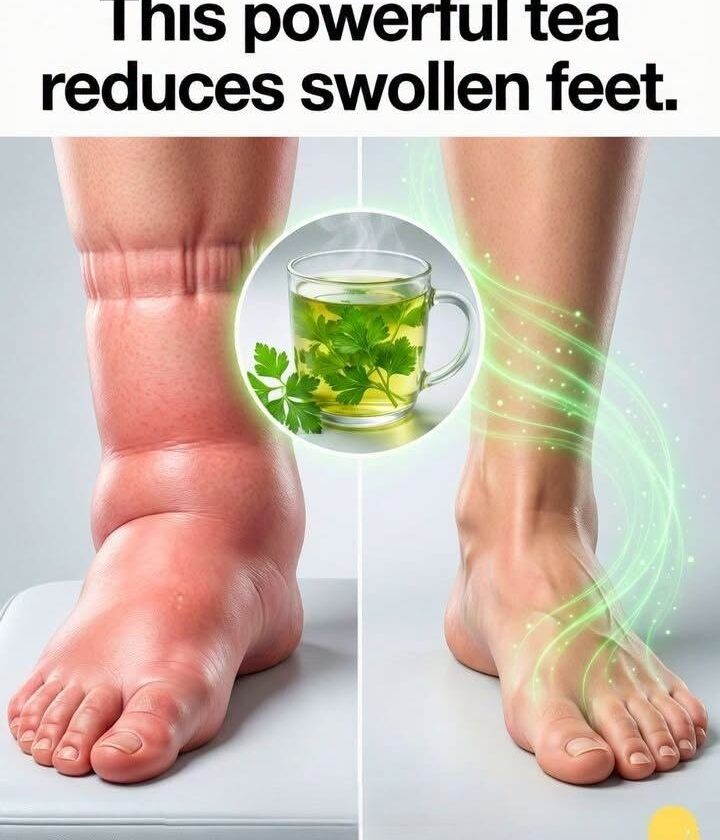
That paragraph is classic health clickbait. It mixes real medical ideas with exaggerated and unsupported claims.
What’s misleading in it
- “Triggers the same fluid-release mechanism as prescription drugs” → not proven for any kitchen herb in a clinically equivalent way
- “Without side effects like depletion of potassium and magnesium” → overgeneralized and misleading
- “Researchers found…” → no actual study or source is provided
What swollen legs/ankles usually mean
Swelling (edema) can happen for many real reasons, such as:
- Standing or sitting too long
- High salt intake
- Venous insufficiency (blood not returning efficiently from legs)
- Heart, kidney, or liver issues in some cases
- Certain medications (like some blood pressure drugs)
About “kitchen herb cures”
Some herbs/spices may have mild diuretic (water-flushing) effects, such as:
- parsley
- dandelion
- hibiscus
But important reality:
- Their effects are mild and inconsistent
- They do not replace diuretic medications when those are medically needed
- They do not treat underlying causes of swelling
When swelling needs medical attention
Get checked if:
- Swelling is persistent or worsening
- It happens with shortness of breath or chest discomfort
- One leg is more swollen than the other
- There is pain, redness, or warmth (could indicate a clot)
Bottom line
There is no kitchen herb that safely replaces prescription diuretics in a medically equivalent way. Posts like this are designed to sound like a “hidden cure,” but they oversimplify complex medical treatment.
If you want, paste the “first comment” herb and I’ll tell you exactly what it actually does (and whether any of the claims are even partly true).