That headline is referring to a very real problem—but it’s dressed up like a “secret trick.”
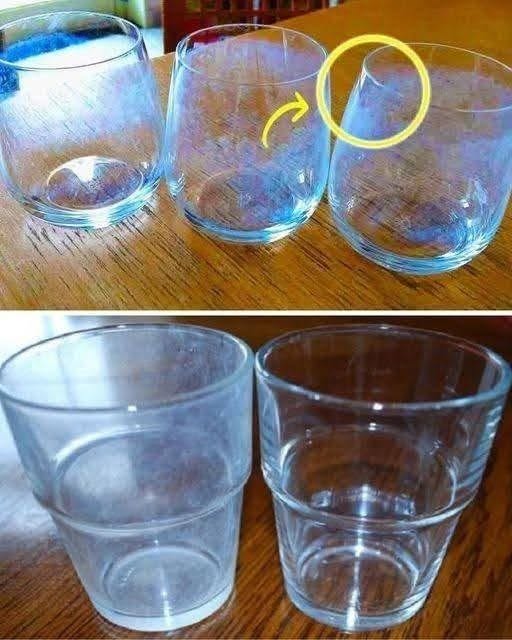
The white patina on glasses is usually not damage. It’s a buildup of minerals.
👓 What the white film actually is
Glassware can develop a cloudy white layer due to:
- hard water minerals (calcium, magnesium)
- dishwasher detergent residue
- high washing temperatures over time
This is called hard water staining or glass etching.
💡 Safe “cool tricks” that actually work
✔️ 1. Vinegar soak (most common fix)
- Soak glasses in equal parts warm water + white vinegar for 10–20 minutes
- Gently wipe with a soft sponge
- Rinse and dry immediately
Vinegar helps dissolve mineral deposits.
✔️ 2. Baking soda paste (for stubborn spots)
- Mix baking soda + a little water
- Gently rub (don’t scrub hard)
- Rinse thoroughly
Baking soda acts as a mild abrasive.
✔️ 3. Lemon juice method
- Rub or soak with lemon juice
- Let sit a few minutes
- Rinse and dry
Natural acid helps break mineral buildup.
⚠️ Important reality check
Sometimes the “white patina” is actually permanent etching:
- caused by long-term dishwasher damage
- cannot be fully removed
- only improved, not reversed
❌ What clickbait posts get wrong
They suggest:
- there is a hidden “magic trick”
- all cloudiness is removable
- no explanation needed
But in reality, results depend on whether it’s:
- surface buildup (removable)
- or permanent glass damage (not fixable)
🧾 Bottom line
Glassware cloudiness is usually caused by mineral buildup and can often be cleaned with simple acids like vinegar. But if the glass is permanently etched, no trick will fully restore it.
If you want, I can show you how to tell in 10 seconds whether your cloudy glasses are fixable or permanently damaged.