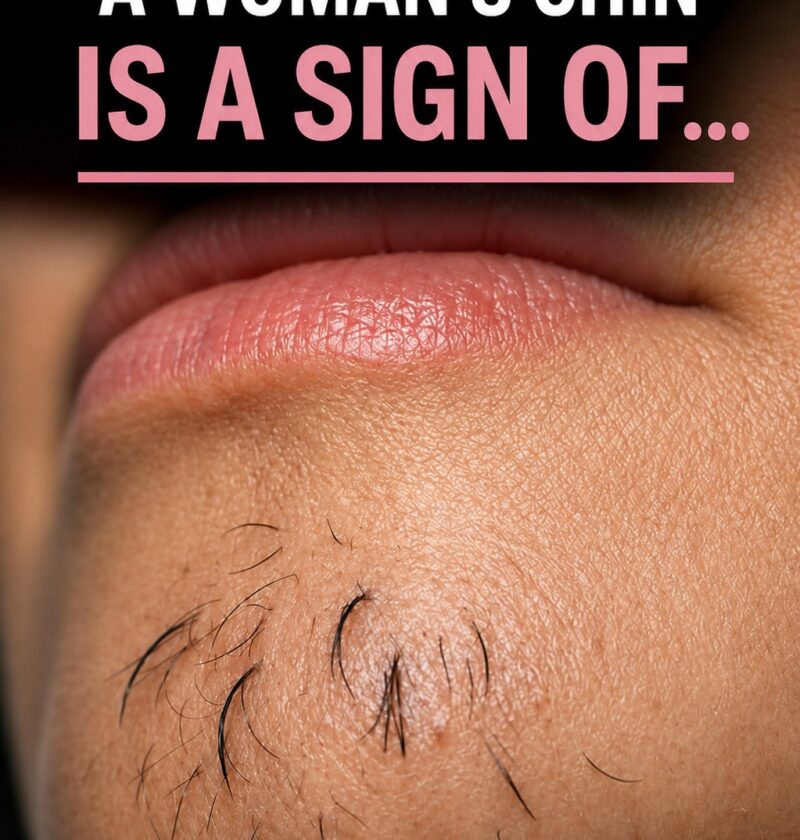
That kind of line is another “viral cliffhanger,” and by itself it’s incomplete—because chin hair in women is not a single clear “sign of” anything on its own.
🧠 What it can mean (real medical context)
A small amount of facial hair on the chin is often completely normal and can be due to:
- Genetics / family traits
- Normal hormone variation
- Ethnic differences in hair distribution
- Age-related hormonal changes (especially after menopause)
⚖️ When it might be medically relevant
More noticeable or sudden increase in chin hair can sometimes be linked to androgen (male hormone) sensitivity or elevation, such as:
- Polycystic Ovary Syndrome (PCOS)
- Perimenopause or menopause hormonal shifts
- Certain medications (e.g., some steroids)
- Rare endocrine conditions (much less common)
🚨 What matters more than the hair itself
Doctors usually look at the pattern, not just one symptom:
- Is it sudden or rapidly increasing?
- Are there irregular periods, acne, or scalp hair thinning?
- Any other signs of hormonal imbalance?
🧩 Bottom line
A few chin hairs = usually normal variation, not a diagnosis.
Significant or sudden changes = worth discussing with a clinician, especially if other symptoms are present.
If you want, I can explain how doctors actually evaluate facial hair growth step-by-step so you can tell what’s normal vs worth checking.