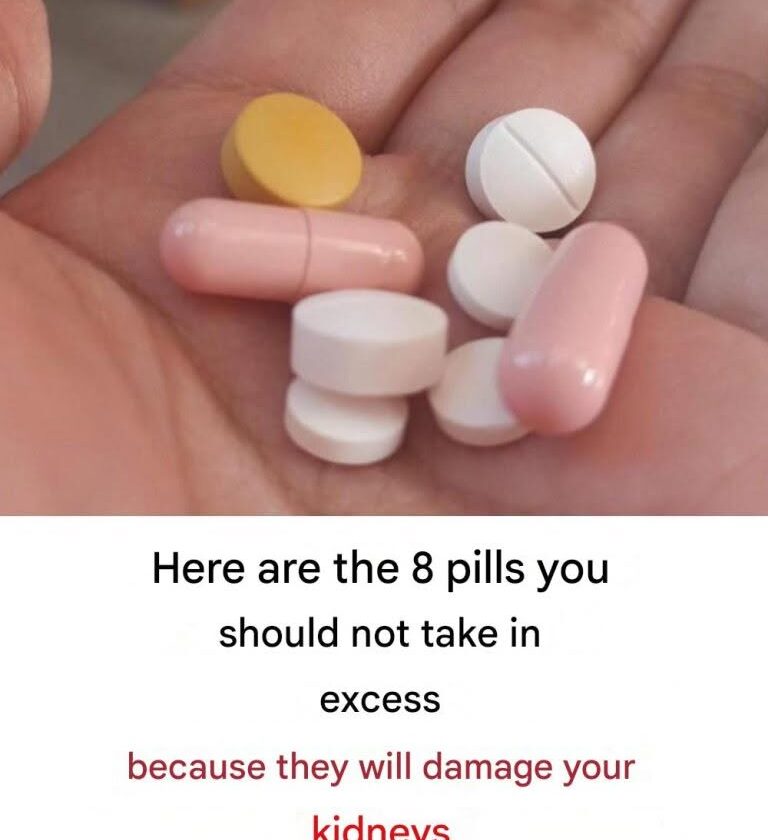
That headline is another clickbait-style warning, and it’s misleading because it suggests a simple list of “8 pills everyone should avoid.” In reality, kidney risk depends on the drug, dose, duration, and a person’s health condition.
Your kidneys filter medications, so some drugs can affect them—but they are often safe when used correctly under medical guidance.
Kidney Disease
💊 Medications commonly linked to kidney stress (not “forbidden,” but used with caution)
1. NSAID painkillers
Examples: ibuprofen, naproxen, diclofenac
- Can reduce blood flow to kidneys if overused or taken long-term
- Risk higher in older adults or dehydrated people
2. Certain antibiotics
Some (like aminoglycosides) may affect kidney function in high doses or sensitive patients
3. Contrast dye (for scans)
Used in CT/MRI scans
- Can temporarily stress kidneys in high-risk patients
4. Some blood pressure medicines
ACE inhibitors / ARBs
- Usually kidney-protective overall, but need monitoring in some cases
5. Diuretics (“water pills”)
Can cause dehydration if not balanced properly
6. Certain acid-reducing drugs (long-term use)
Some PPIs may be linked with kidney issues when used excessively
7. Lithium (for mood disorders)
Requires careful monitoring of kidney levels
8. Some herbal supplements
Unregulated products may contain substances harmful to kidneys
⚠️ Key truth
- These are not “banned” or universally dangerous pills
- Many are essential and life-saving when used correctly
- Problems usually occur with:
- Overuse
- Long-term unsupervised use
- Existing kidney disease
- Drug interactions
🧠 Bottom line
Posts like “8 pills you should never take” are misleading. The real message is:
👉 “Some medications require caution and medical supervision—not avoidance.”
If you want, I can:
- List painkillers that are safest for kidneys
- Or explain early signs of kidney damage
- Or check a specific medication for you