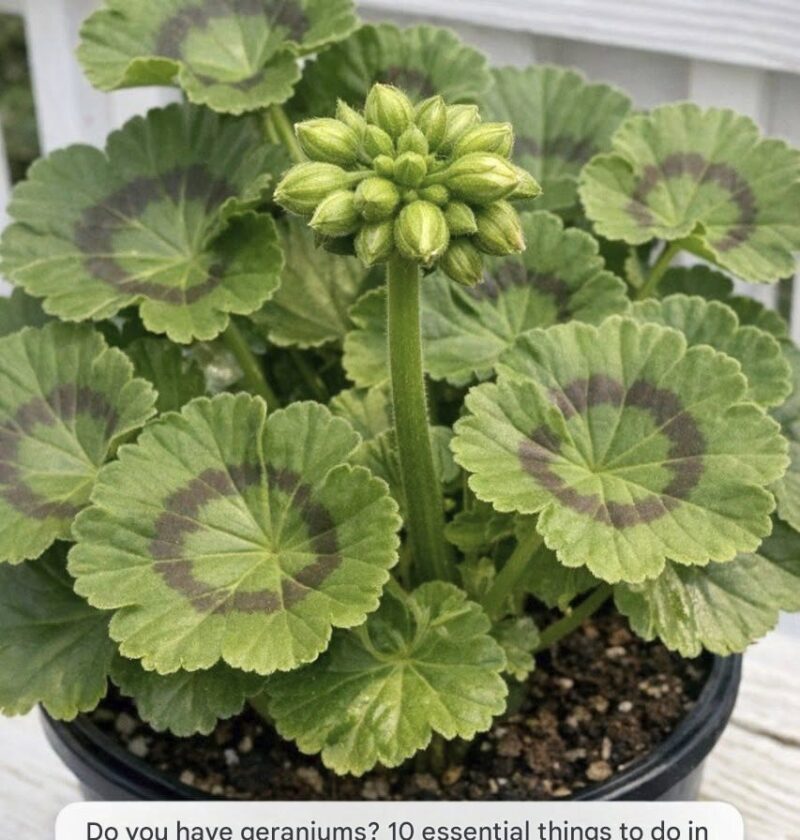
If you have geraniums (commonly Pelargonium), May is often the time to set them up for a long flowering season. The claim of “uninterrupted vibrant flowering until frost” is a bit promotional, but these steps can genuinely help.
1. Move Them Into Full Sun
Geraniums bloom best with at least 6–8 hours of sunlight daily. Too much shade usually means fewer flowers and leggier growth.
2. Remove Dead or Damaged Growth
Trim away yellow leaves, dead stems, and winter-damaged growth so the plant can focus energy on new shoots and blooms.
3. Deadhead Spent Flowers
Remove faded flower clusters regularly. This encourages the plant to produce new blooms rather than putting energy into seed production.
4. Feed Regularly
Use a balanced fertilizer or one formulated for flowering plants according to label directions. Overfeeding, especially with nitrogen, can produce lots of leaves but fewer flowers.
5. Check Pot Size
If roots are circling tightly around the pot, consider moving the plant to a slightly larger container with fresh potting mix.
6. Water Properly
Allow the top layer of soil to dry slightly between waterings. Geraniums generally prefer not to sit in constantly wet soil.
7. Improve Air Circulation
Space plants appropriately and avoid overcrowding, which can help reduce disease problems.
8. Pinch Leggy Shoots
Pinching the tips of overly long stems can encourage bushier growth and more flowering points.
9. Watch for Pests
Common issues include aphids, whiteflies, and spider mites. Catching infestations early makes them easier to manage.
10. Protect From Late Frosts
If you’re in an area where frost is still possible, keep an eye on forecasts and protect plants if temperatures drop unexpectedly.
What Actually Matters Most?
For most gardeners, the biggest factors are:
- Plenty of sunlight
- Consistent deadheading
- Proper watering
- Regular feeding
- Good drainage
Those five practices usually have a much bigger impact on flowering than any “secret trick” often promoted in viral gardening articles.