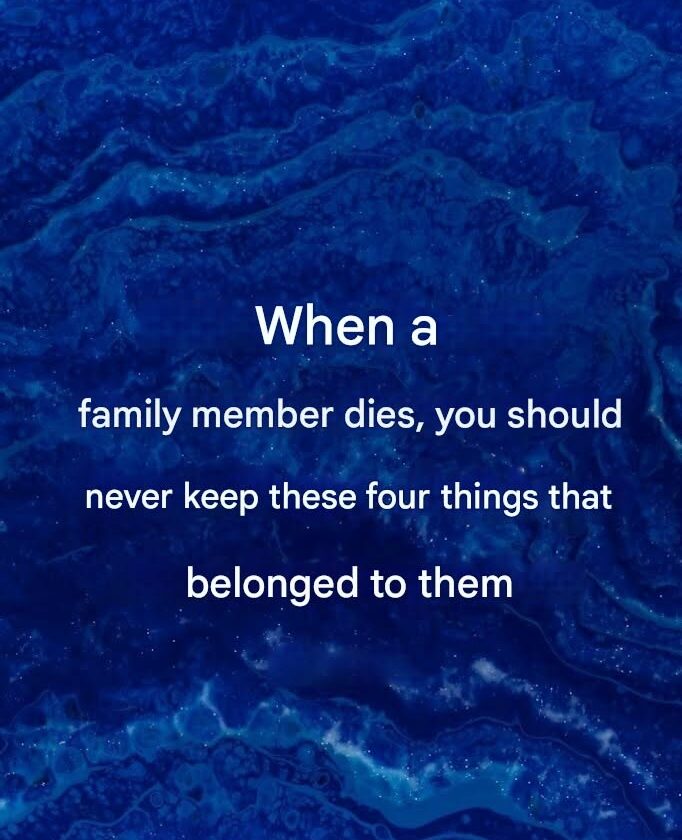
That headline is usually a mix of grief advice, superstition, and clickbait.
There is no universal rule that certain belongings of a deceased person must not be kept. Whether to keep, donate, or dispose of items is a personal, cultural, practical, and sometimes legal decision.
🧠 Why these posts are misleading
They often imply that keeping certain objects will:
- bring bad luck
- prevent healing
- attract negative energy
There is no evidence for these claims.
📦 Items people commonly choose to handle carefully
Important documents
Keep items like:
- wills
- property records
- insurance papers
- identification documents
These may have legal importance.
Medications
Do not keep or use prescription medicines that belonged to someone else. Dispose of them safely according to local guidance.
Personal items
Things like:
- photographs
- jewelry
- clothing
- letters
are often kept, donated, or shared with family members depending on sentimental value.
Financial and digital accounts
It’s important to review:
- bank accounts
- subscriptions
- online accounts
to ensure everything is properly managed.
❤️ The emotional side
There is no deadline for deciding what to do with a loved one’s belongings. Some people keep many mementos; others prefer to donate most items. Both approaches can be healthy.
🧠 Bottom line
“Do not keep these items that belonged to a deceased person” is usually an attention-grabbing headline. The only items that generally require special handling are things like medications, legal documents, and financial records. For personal belongings, the choice is largely up to the family and their circumstances.