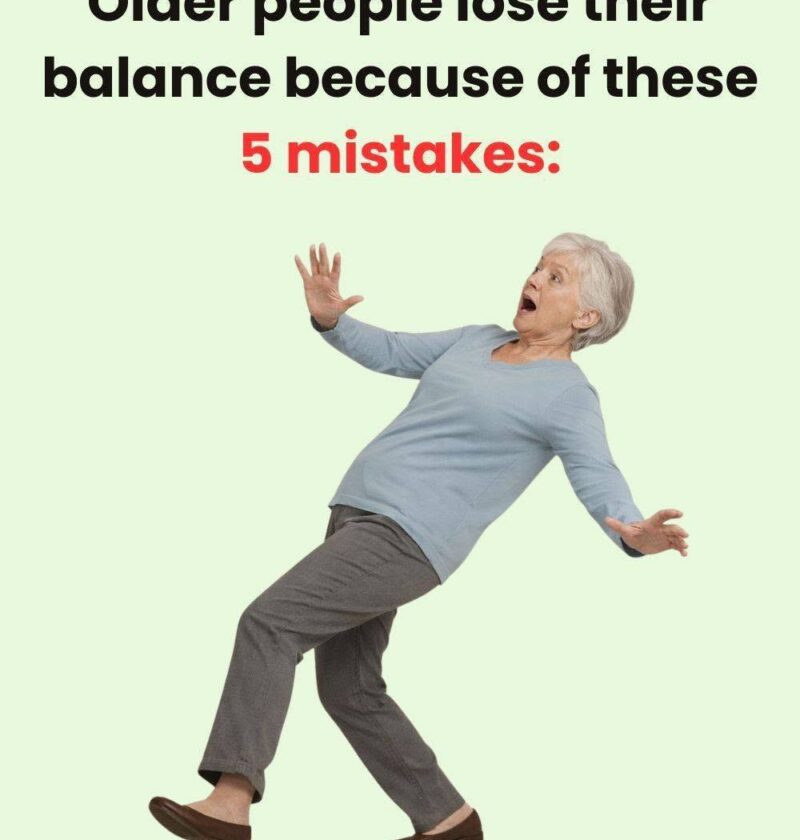
That headline is another “See more” style exaggeration, but the topic itself—balance in older adults—is real and important.
Falls usually don’t come from one dramatic cause, but from small everyday factors adding up. Here are genuinely common mistakes or habits that can affect balance:
🧠 1. Not staying physically active
Weak leg muscles and poor core strength are a major cause of balance problems.
Even simple walking helps maintain stability.
👟 2. Wearing unsafe footwear
- Loose slippers
- High heels
- Worn-out soles
These reduce grip and stability.
🏠 3. Poor home setup
Common hazards:
- Loose rugs
- Cluttered walkways
- Poor lighting (especially at night)
- Slippery bathroom floors
💊 4. Medication side effects
Some medicines can cause:
- Dizziness
- Low blood pressure
- Drowsiness
This can affect balance, especially when standing up quickly.
🚶♂️ 5. Standing up too quickly
This can cause orthostatic hypotension (a sudden drop in blood pressure), leading to dizziness.
👁️ 6. Ignoring vision or hearing problems
Poor vision makes it harder to judge distance and obstacles. Hearing also helps with spatial awareness.
💧 7. Dehydration or poor nutrition
Low fluid intake or vitamin deficiencies (like B12 or vitamin D) can affect strength and coordination.
🧍 8. Not using support when needed
Avoiding walking aids when they’re actually helpful can increase fall risk.
⚖️ Bottom line
Balance problems in older adults are usually caused by a mix of muscle strength, environment, health conditions, and medications—not one hidden “mistake.”
If you want, I can give you a simple daily routine to improve balance and prevent falls safely at home.