This is another fictional suspense-thriller hook, not a real or verifiable account.
It uses several classic storytelling devices designed to keep readers scrolling:
🎭 The formula
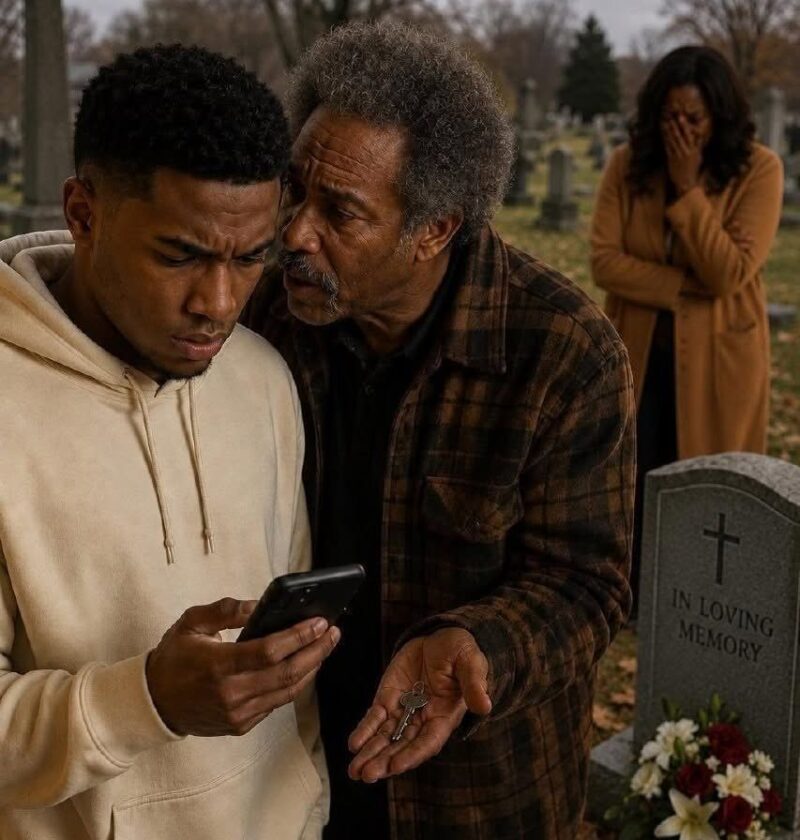
- A shocking revelation at a funeral (“empty coffin”)
- A mysterious object (the copper key)
- An urgent warning (“don’t go home”)
- A suspicious message from a trusted person (the mother)
- A cliffhanger ending
The goal is to make readers immediately ask:
“Was the father still alive?”
“What’s in Unit 17?”
“Can the mother be trusted?”
🧠 Why it feels so compelling
This type of story combines multiple suspense triggers:
- Family secrets
- Conspiracies
- Hidden identities
- Time pressure
- Conflicting instructions
Your brain naturally wants to resolve the uncertainty.
⚖️ Signs it’s likely fiction
Several elements are highly cinematic:
- The gravedigger conveniently knows a huge secret.
- The father supposedly arranged an elaborate plan involving a hidden key.
- The warning arrives at the exact dramatic moment.
- The mother’s text creates instant suspicion.
Real life rarely unfolds with such perfect timing and layered mysteries.
📚 What genre this resembles
The setup is very similar to:
- mystery thrillers
- conspiracy novels
- serialized social media fiction
- web-novel cliffhangers
The “secret key + storage unit + fake death” combination is a particularly common thriller trope.
🧭 Bottom line
This is almost certainly a fictional suspense story designed to maximize curiosity and emotional engagement.
Like many of the stories you’ve shared, it follows the pattern:
ordinary situation → shocking revelation → mysterious warning → cliffhanger.
The story isn’t trying to inform you—it’s trying to make you desperate to know what happens next.