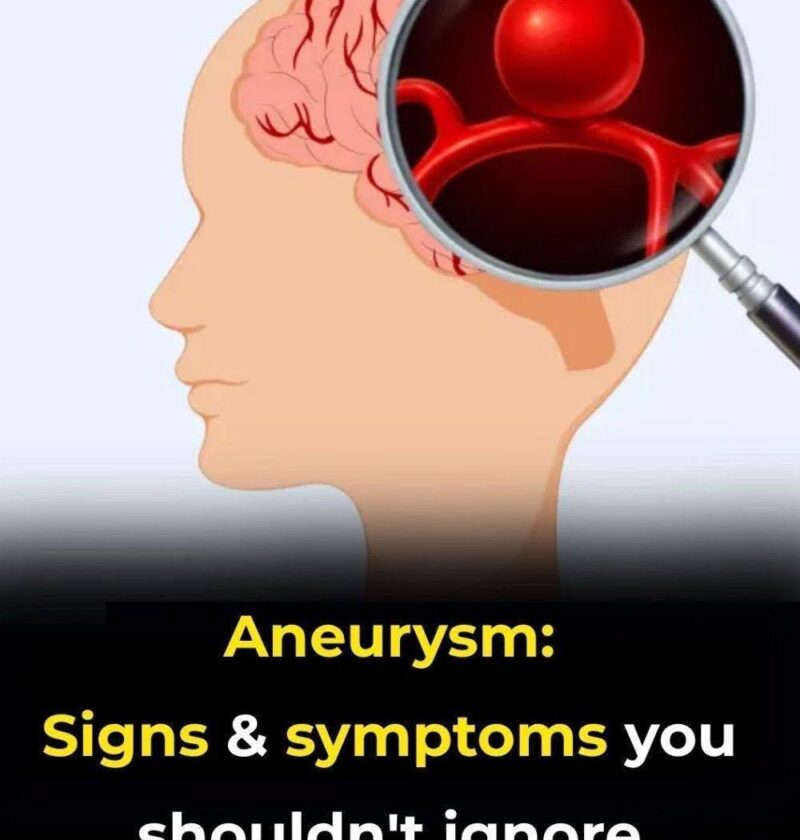
The headline “Aneurysm: Signs you shouldn’t ignore” is important, but it can also be misleading if it implies that all aneurysms produce obvious warning signs. Many aneurysms cause no symptoms at all until they become large or rupture.
Common types include:
Brain aneurysm
An unruptured brain aneurysm may cause:
- A severe or unusual headache
- Pain behind or above one eye
- Blurred or double vision
- A drooping eyelid
- Numbness or weakness on one side of the face (less common)
A ruptured brain aneurysm is a medical emergency. Symptoms include:
- A sudden, extremely severe headache (“the worst headache of my life”)
- Nausea and vomiting
- Stiff neck
- Sensitivity to light
- Confusion, drowsiness, or loss of consciousness
- Seizures
Abdominal aortic aneurysm
Many cause no symptoms. If symptoms occur, they may include:
- Deep, persistent pain in the abdomen or back
- A pulsating sensation in the abdomen
If it ruptures, symptoms can include:
- Sudden, severe abdominal or back pain
- Dizziness or fainting
- Cold, clammy skin
- Rapid heartbeat
Risk factors
- Smoking
- High blood pressure
- Older age
- Family history of aneurysms
- Certain inherited connective tissue disorders
When to get emergency help
Call your local emergency services immediately if someone develops:
- A sudden, severe headache unlike any they’ve had before
- Sudden collapse or loss of consciousness
- Severe chest, abdominal, or back pain accompanied by fainting or signs of shock
Many aneurysms are discovered incidentally during imaging done for other reasons. People with significant risk factors—such as a strong family history or a history of smoking—may benefit from discussing screening with their healthcare professional, particularly for abdominal aortic aneurysms in populations where screening is recommended.
The key takeaway is that many aneurysms have no warning signs, but a sudden severe headache or abrupt, intense chest, abdominal, or back pain should never be ignored because these can signal a life-threatening emergency.