That’s another “See more” clickbait medical headline, but aneurysms are a real condition worth understanding calmly and accurately.
🧠 What an aneurysm is
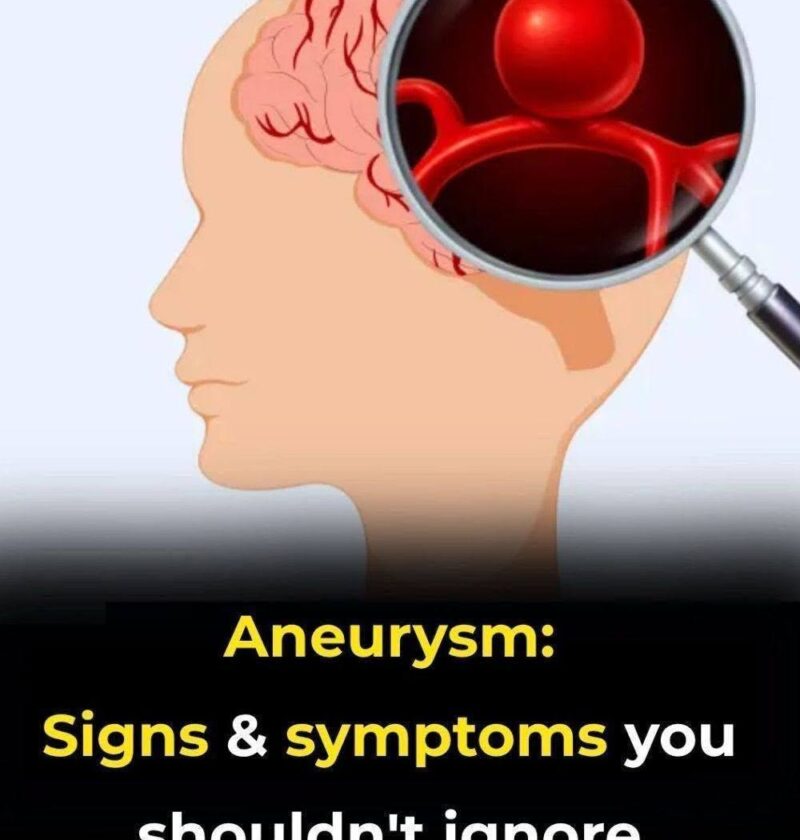
An aneurysm is a weak, bulging area in a blood vessel. It can occur in places like:
- the brain (cerebral aneurysm)
- the aorta (major artery in the chest or abdomen)
Many aneurysms cause no symptoms until they become large or rupture, which is why they can be serious.
⚠️ Possible warning signs (when they do appear)
Brain aneurysm (before rupture)
- severe or unusual headaches
- vision changes (blurred or double vision)
- pain above or behind the eye
- numbness or weakness in the face
Aneurysm rupture (emergency)
- sudden “worst headache of life”
- loss of consciousness
- stiff neck
- nausea/vomiting
- seizures
Aortic aneurysm (chest/abdomen)
- deep, constant pain in chest, back, or abdomen
- pulsating feeling in the abdomen
- sudden severe pain if rupture occurs
🚨 Important reality check
- Most aneurysms don’t show obvious early signs
- Many are found accidentally on scans
- Rupture is rare but medical emergency when it happens
✔️ Risk factors include:
- high blood pressure
- smoking
- age
- family history
- certain connective tissue disorders
Bottom line
These posts are usually designed to create fear. The real message is simpler:
Aneurysms are often silent, and risk management (like blood pressure control and not smoking) matters more than trying to “spot hidden signs.”
If you want, I can explain how doctors detect aneurysms early and who should actually get screened.