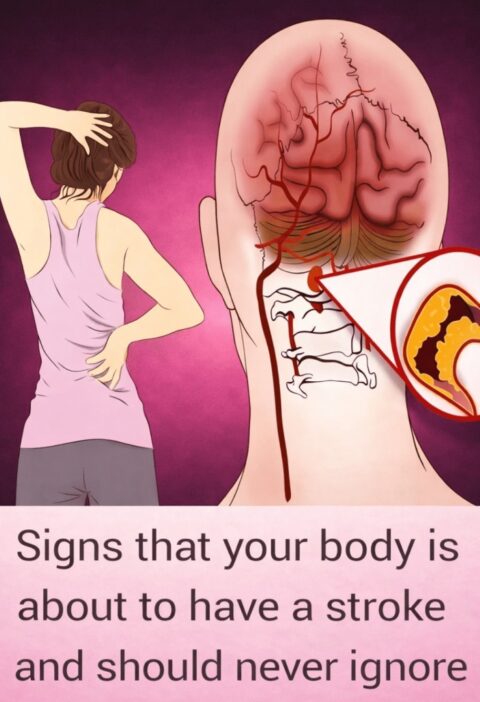
The idea that your body gives a clear “1 month warning” before every stroke is misleading. Many strokes occur suddenly with no warning. However, some people experience warning signs days or weeks before a stroke, especially a transient ischemic attack (TIA), sometimes called a “mini-stroke.”
10 Warning Signs That May Occur Before a Stroke
- Sudden weakness or numbness
- Especially on one side of the body (face, arm, or leg).
- Facial drooping
- One side of the face may sag or feel numb.
- Difficulty speaking
- Slurred speech, trouble finding words, or inability to understand others.
- Vision problems
- Blurred, double, or sudden loss of vision in one or both eyes.
- Severe headache
- A sudden, intense headache unlike previous headaches, especially if accompanied by other symptoms.
- Dizziness or loss of balance
- Trouble walking, coordination problems, or unexplained falls.
- Confusion
- Sudden difficulty thinking clearly or understanding simple information.
- Transient ischemic attacks (TIAs)
- Brief stroke-like symptoms that resolve within minutes or hours. These are medical emergencies because they often precede a major stroke.
- Sudden fatigue or weakness
- Unusual exhaustion, particularly when accompanied by other neurological symptoms.
- Difficulty swallowing
- New problems swallowing can sometimes occur before or during a stroke.
Remember FAST
The easiest way to recognize a possible stroke is FAST:
- Face drooping
- Arm weakness
- Speech difficulty
- Time to call emergency services immediately
Risk Factors That Increase Stroke Risk
- High blood pressure
- Smoking
- Diabetes
- High cholesterol
- Heart disease, especially atrial fibrillation
- Obesity
- Physical inactivity
- Excessive alcohol use
When to Seek Help
If you or someone else experiences any sudden neurological symptom, even if it disappears after a few minutes, seek emergency medical attention immediately. Rapid treatment can dramatically improve outcomes and may prevent permanent disability.
If you’re interested, I can also explain how to distinguish stroke symptoms from migraine, vertigo, or anxiety attacks, which are commonly confused with strokes.