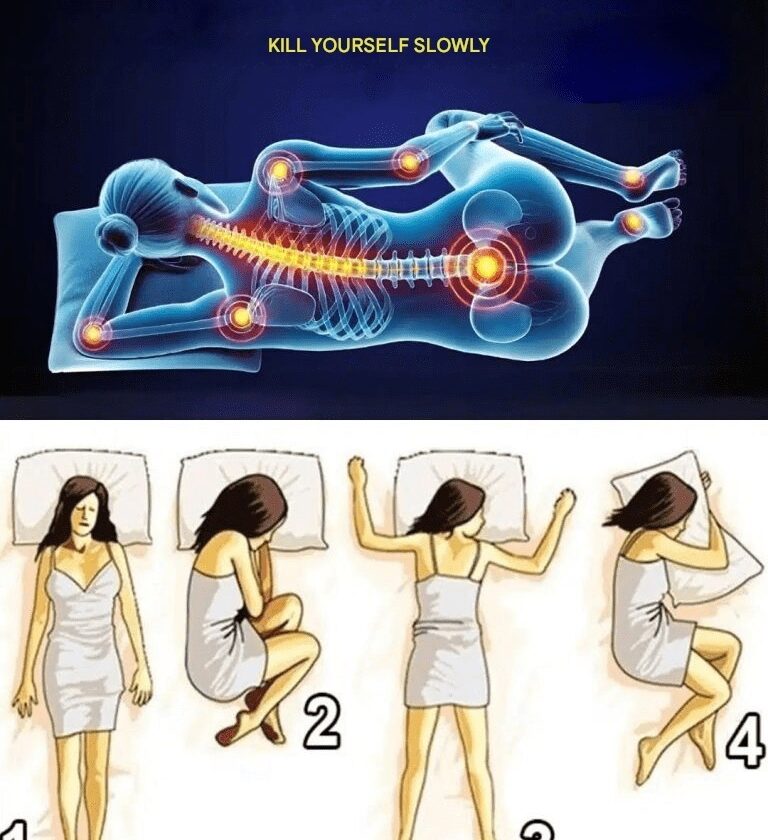
That’s another clickbait-style headline. There isn’t a single “most dangerous sleeping position” for everyone—but sleep posture can matter in specific health situations.
🛌 What sleep positions actually mean in real medicine
⚠️ 1. Sleeping flat on your back (supine) — can be risky for some people
Not dangerous for most healthy people, but it may worsen:
- Obstructive Sleep Apnea
- snoring
- acid reflux (in some cases)
In sleep apnea, lying on the back can increase airway collapse because gravity pulls the tongue and soft tissues backward.
⚠️ 2. Sleeping on the stomach — most commonly “discouraged”
This is often labeled the “worst” in general advice because it can:
- strain the neck (forced rotation)
- stress the lower back
- reduce natural spinal alignment
It’s not dangerous in a medical emergency sense, but it’s the least spine-friendly long term.
👍 3. Side sleeping — usually safest for most people
Often recommended because it can:
- reduce snoring and apnea symptoms
- improve digestion/reflux in some people (left side especially)
- support spinal alignment (with proper pillow support)
🧠 The key truth
There is no universally “dangerous” sleeping position for healthy individuals. The real issue is:
- underlying conditions (like sleep apnea or reflux)
- poor spinal support
- prolonged discomfort
🚨 When sleep position does matter clinically
Doctors pay attention mainly if:
- loud snoring + breathing pauses (sleep apnea)
- chronic neck/back pain
- severe reflux at night
- pregnancy (left-side sleeping often recommended)
Bottom line
Most viral posts exaggerate this topic. The “most dangerous position” is usually just stomach sleeping or back sleeping in people with specific conditions—not a general rule for everyone.
If you want, I can rank sleep positions based on neck pain, digestion, and breathing quality separately—that’s where it actually gets interesting.