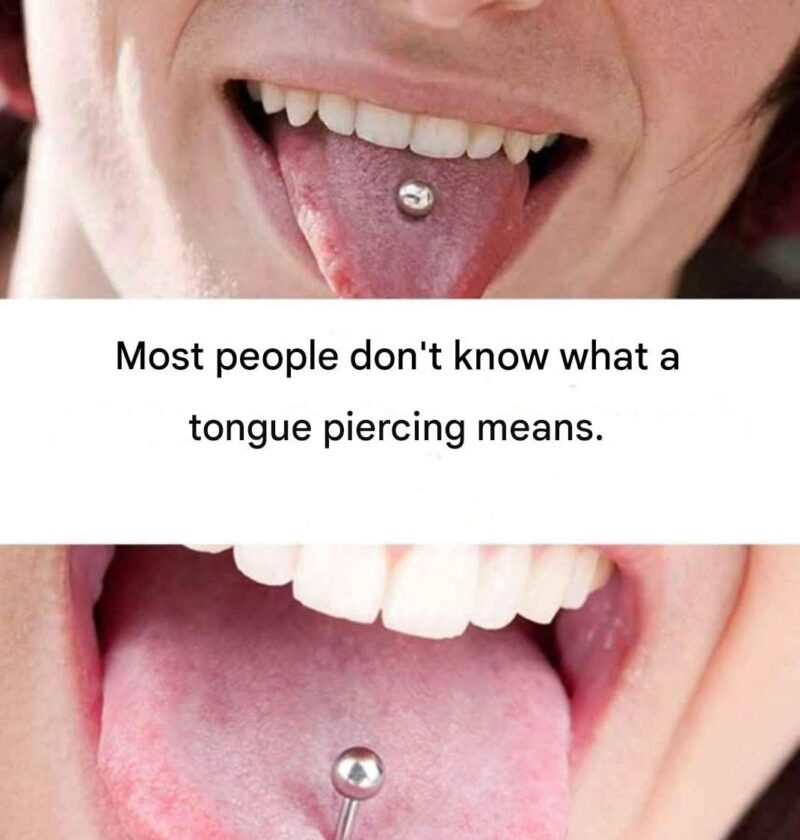
A tongue piercing is primarily a form of body modification and self-expression. While people sometimes claim it has a hidden or universal meaning, there is no single, widely accepted symbolic meaning.
Some of the associations people attribute to tongue piercings include:
- Self-expression and individuality: Many people get one simply because they like the aesthetic.
- Rebellion or alternative culture: In the 1980s and 1990s, tongue piercings became associated with punk, goth, and other alternative subcultures.
- Confidence or body autonomy: For some, it’s a way to express ownership over their body.
- Sensuality: Because of the piercing’s location, some people associate it with sexuality, but this is a stereotype rather than a universal meaning.
Origin
Tongue piercing has existed for centuries in different cultures, though with different purposes:
- Aztec civilization and Maya civilization practiced ritual tongue piercing as part of religious ceremonies. Priests or rulers would pierce the tongue as a form of bloodletting to communicate with the gods or ancestors. This was a sacred ritual, not decorative.
- Modern decorative tongue piercing became popular in Western countries during the late 20th century, particularly in the 1980s and 1990s, alongside the broader body-piercing movement.
Is it a “little-known symbol”?
Not really. Despite articles or social media posts claiming that a tongue piercing is a secret symbol for a particular lifestyle or identity, there is no evidence of a universally recognized hidden code. Its meaning depends on the individual wearer, and for many people, it has no symbolic meaning at all beyond personal style.
So if you see someone with a tongue piercing, it’s not possible to infer anything reliable about their personality, beliefs, or relationships based on the piercing alone.