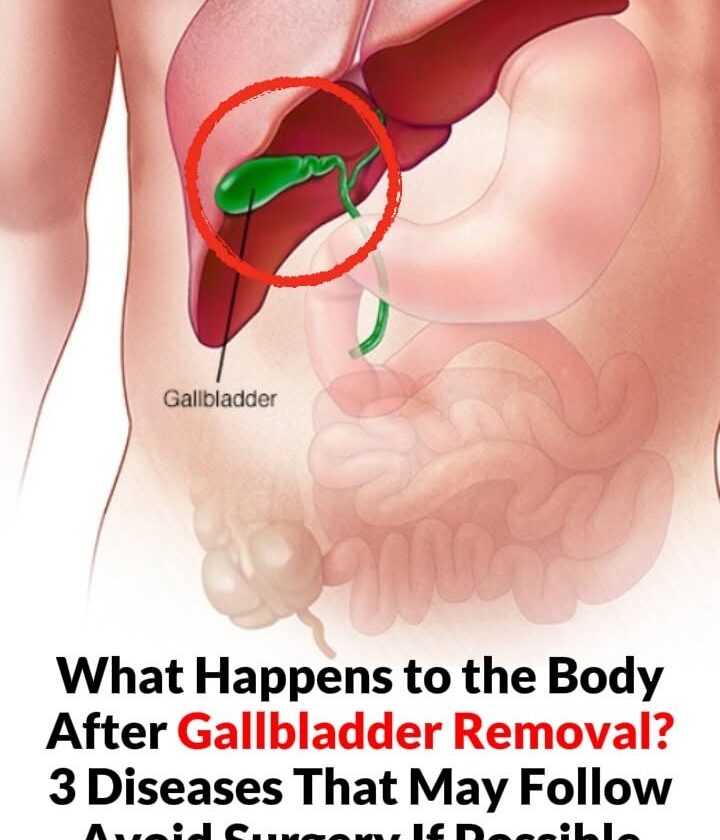
The headline “What Happens to the Body After Gallbladder Removal? 3 Diseases That May Follow – Avoid Surgery If Possible” is misleading. While gallbladder removal can have side effects and some people develop digestive symptoms afterward, it is often the recommended and safest treatment for certain gallbladder problems, such as repeated gallstone attacks or inflammation.
What happens after gallbladder removal?
The gallbladder stores bile, which helps digest fats. After surgery, the liver still makes bile, but it flows directly into the small intestine instead of being stored.
Most people:
- Recover fully within a few weeks.
- Can eat a normal diet over time.
- Experience little or no long-term digestive problems.
Possible issues after surgery
Some people may develop:
- Diarrhea
- Usually mild and temporary.
- Often improves within weeks or months.
- Bloating or indigestion
- Fatty meals may be harder to tolerate at first.
- Eating smaller, lower-fat meals during recovery often helps.
- Post-cholecystectomy syndrome
- A small number of people continue to have abdominal pain or digestive symptoms after surgery.
- Sometimes the symptoms are due to another condition rather than the absence of the gallbladder.
Does it cause other diseases?
Research has found associations between gallbladder removal and a slightly increased risk of some digestive conditions in certain populations, but the absolute risk for an individual is generally low, and the surgery itself is not considered to directly “cause” three inevitable diseases.
Should you avoid surgery if possible?
Not necessarily. Surgery should be based on your medical condition.
Gallbladder removal is commonly recommended if you have:
- Recurrent painful gallstones
- Gallbladder inflammation (cholecystitis)
- Gallstone pancreatitis
- Certain complications involving the bile ducts
In these situations, avoiding surgery may be riskier than having it, because untreated gallstones can lead to serious infections or pancreatitis.
The bottom line
The headline exaggerates the risks. Gallbladder removal is one of the most common surgical procedures and is generally very safe. While some people experience digestive changes afterward, most recover well, and for those with significant gallbladder disease, the benefits often outweigh the risks. If you’re considering surgery, discuss the expected benefits, possible side effects, and alternatives with your surgeon based on your specific condition.