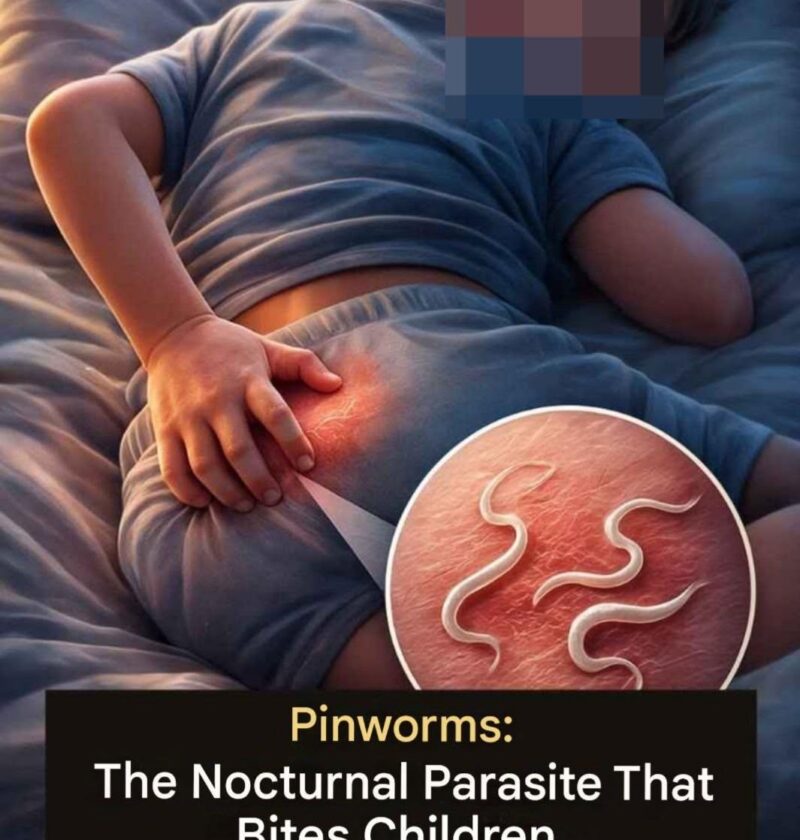
🪱 Pinworms in Children: What They Are and Why They Cause Nighttime Itching
Pinworms (also called threadworms) are tiny intestinal parasites that commonly infect children. The medical name is Enterobius vermicularis. They are very common, especially in school-aged kids, and are usually not dangerous—but they can be very uncomfortable.
🧬 What pinworms are
Pinworms are small, white worms (about the size of a staple thread). They live in the intestines of humans.
- Infection happens when pinworm eggs are swallowed (often through contaminated hands, surfaces, or food)
- The eggs hatch in the intestines and mature into adult worms
- Adult worms then move to the rectal area to lay more eggs
🌙 Why itching is worse at night
Nighttime itching is the most typical symptom, and there’s a clear reason:
- Female pinworms come out of the anus at night to lay eggs
- The eggs and movement cause irritation and itching around the anus
- This leads to scratching, which spreads eggs to fingers and bedding
That’s why infections often spread easily in households.
👶 Common symptoms in children
- Intense itching around the anus, especially at night
- Trouble sleeping or irritability
- Restlessness
- Sometimes mild stomach discomfort
- In some cases, no symptoms at all
🔁 How it spreads easily
Pinworms spread through a simple cycle:
- Eggs get on hands (after scratching)
- Hands touch toys, food, surfaces
- Eggs are swallowed by the same child or others
- Cycle repeats
Eggs can survive on surfaces for 2–3 weeks, making reinfection common.
🧼 Treatment (simple and effective)
Pinworm infections are easy to treat with medication:
- Common medicines: mebendazole, albendazole, or pyrantel pamoate
- Usually given in one dose and repeated after 2 weeks
- Often entire household is treated to prevent reinfection
🧽 Prevention tips
- Wash hands thoroughly (especially before eating and after toilet use)
- Keep fingernails short and clean
- Change underwear daily
- Wash bedding, pajamas, and towels in hot water
- Avoid scratching (hard for kids, but important)
🚨 When to see a doctor
If itching is persistent or infection keeps coming back, a doctor can confirm it and prescribe the correct treatment.
🧠 Key takeaway
Pinworms are common, treatable, and not dangerous, but they spread easily—so hygiene and treating everyone in close contact is the key to stopping them.
If you want, I can also explain how to tell pinworm itching apart from allergies or skin irritation, since those often get confused.