That headline is another fear-driven exaggeration. Gallbladder removal is a very common and generally safe surgery, and most people do not develop serious “new diseases” afterward.
Let’s break it down clearly.
🧠 What the gallbladder does
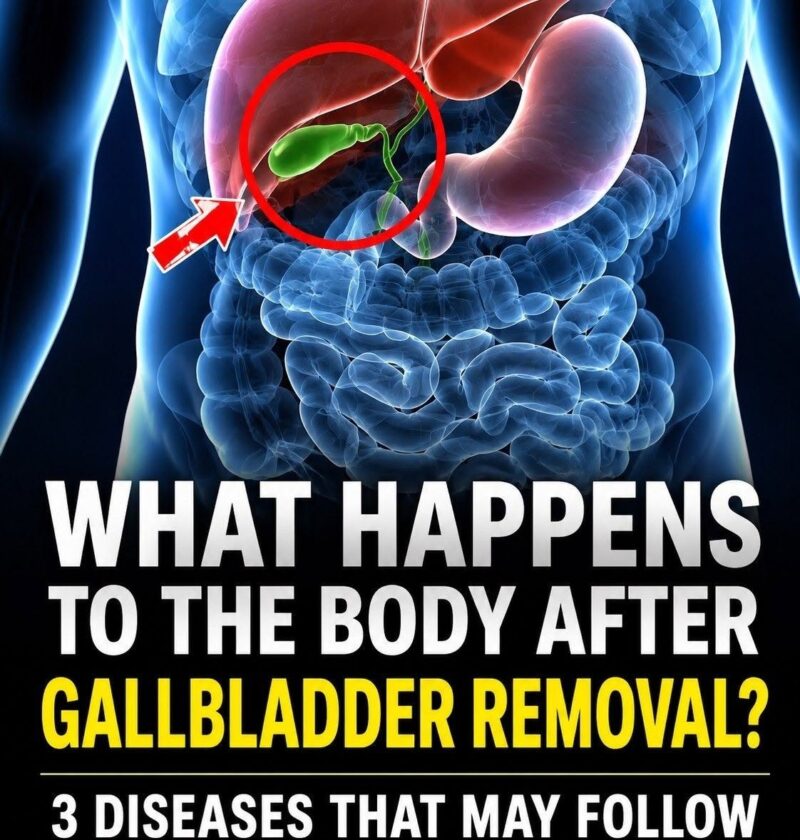
Your Gallbladder stores bile (a digestive fluid made by the liver) and releases it when you eat fatty foods.
When it’s removed (a procedure called cholecystectomy), bile no longer gets stored—it drips continuously into the intestines instead.
🏥 After removal: what actually changes
Most people:
- digest food normally
- live completely normal lives
- just may need time to adjust digestion
⚠️ Possible side effects (not “diseases” in most cases)
Some people may experience:
1. 💩 Loose stools or diarrhea
- Happens because bile flows continuously
- Usually improves over time
- Sometimes managed with diet changes
2. 🍽️ Fatty food sensitivity
- Large greasy meals may cause discomfort
- Body still digests fat, just less efficiently at first
3. 😣 Post-cholecystectomy syndrome (rare)
- A mix of symptoms like bloating, indigestion, or pain
- Only a small percentage experience this long-term
❌ What the headline is misleading about
Claims like:
“3 diseases that may follow—avoid surgery if possible”
are misleading because:
- gallbladder removal is done when the gallbladder is already diseased (stones, infection, blockage)
- untreated gallbladder disease can be much more dangerous (severe pain, infection, pancreatitis)
- serious complications from surgery are rare compared to benefits
🧠 Bottom line
- Surgery is not something doctors suggest casually
- Removing the gallbladder usually prevents worse problems, it doesn’t create new diseases
- Most people recover fully and live normally
If you want, tell me what condition the article mentioned (gallstones, inflammation, etc.), and I’ll explain when surgery is actually necessary vs when it can be avoided.