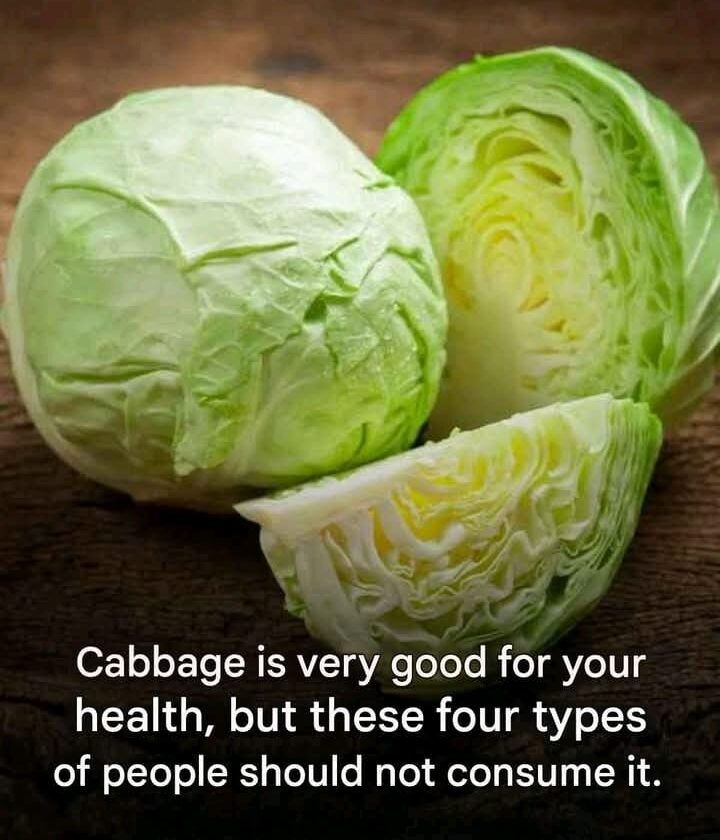
That headline is another clickbait-style exaggeration. In reality, there are not “4 types of people who shouldn’t eat cabbage” in a strict or universal medical sense—but there are a few situations where some people should limit or be careful with cabbage.
🥬 Who may need to be cautious with cabbage
1) People with thyroid issues (especially hypothyroidism)
- Raw cabbage contains compounds called goitrogens
- In very large amounts, they may slightly interfere with iodine use
- 👉 Cooking cabbage reduces this effect a lot
2) People with digestive sensitivity (IBS or bloating issues)
- Cabbage is high in fiber and fermentable carbs
- Can cause gas, bloating, or discomfort
3) People taking blood-thinning medication
- Cabbage contains vitamin K, which affects clotting
- Not forbidden—but intake should be consistent, not extreme changes
4) People with certain gut conditions during flare-ups
- Like severe gastritis or inflammatory bowel disease (in active phases)
- Raw cabbage may irritate symptoms
🚫 What the headline gets wrong
- It implies strict categories of people who “shouldn’t eat it at all”
- In reality, cabbage is safe and healthy for most people
- Cooking and portion size usually solve most issues
🥬 Real benefits of cabbage
- High in fiber (gut health)
- Rich in vitamin C and K
- Contains antioxidants
- Supports heart health and digestion
🟢 Bottom line
Cabbage is not dangerous for most people. Only certain individuals may need moderation, not avoidance, and cooking makes it easier to digest.
If you want, I can also break down other “foods you must never eat” headlines—they’re usually just as misleading.