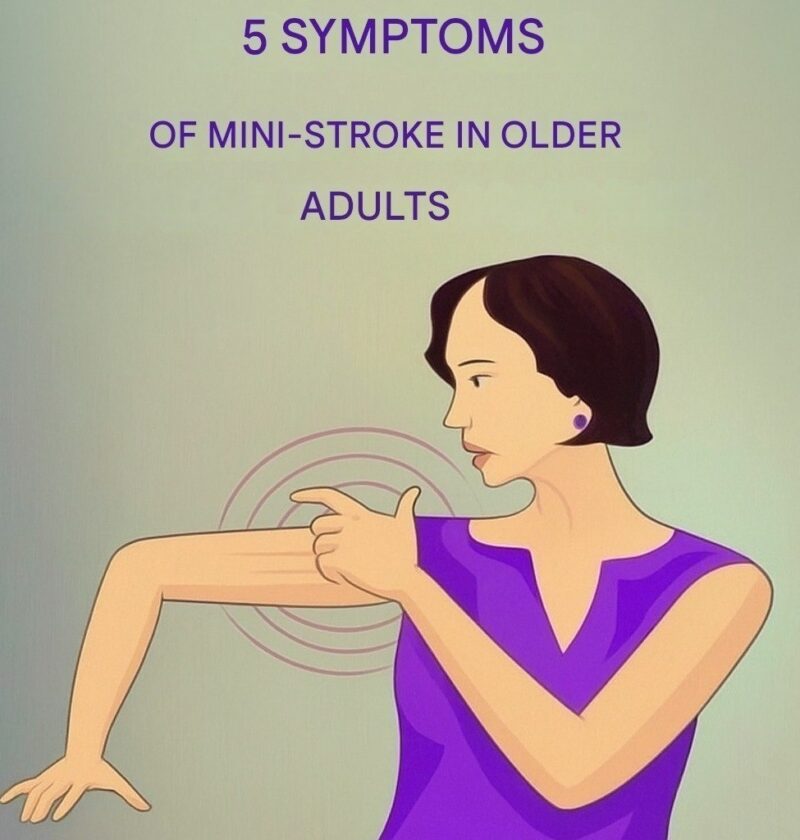
This headline is referring to a transient ischemic attack (TIA), often called a “mini-stroke.” It’s not harmless—even though symptoms may go away quickly, it can be a serious warning sign of a full stroke.
🧠 Transient Ischemic Attack
A TIA happens when blood flow to the brain is briefly blocked, causing stroke-like symptoms that usually resolve within minutes to hours.
⚠️ 5 symptoms in seniors that should never be ignored
1. Sudden weakness or numbness
Often on one side of the face, arm, or leg.
2. Trouble speaking or understanding
Slurred speech or confusion finding words.
3. Vision changes
Sudden loss of vision in one eye or blurred vision.
4. Dizziness or loss of balance
Difficulty walking, coordination problems, or sudden instability.
5. Sudden severe headache (less common)
Especially if it appears out of nowhere and is unusual for the person.
🚨 Why TIAs are urgent
- Symptoms may disappear within minutes
- But they are a major warning sign of a possible stroke
- Risk of a full stroke is highest in the first hours to days after a TIA
🧭 What to do immediately
If any of these symptoms appear:
- Treat it as an emergency
- Seek urgent medical care immediately (do not wait for symptoms to pass)
🧠 Simple memory tool: FAST
- Face drooping
- Arm weakness
- Speech difficulty
- Time to call emergency help
👍 Bottom line
A “mini stroke” is not minor—it’s a medical warning signal that needs immediate attention to prevent a major stroke.
If you want, I can also explain:
- differences between stroke vs TIA
- early stroke warning signs in younger people
- or how doctors test for TIAs 👍