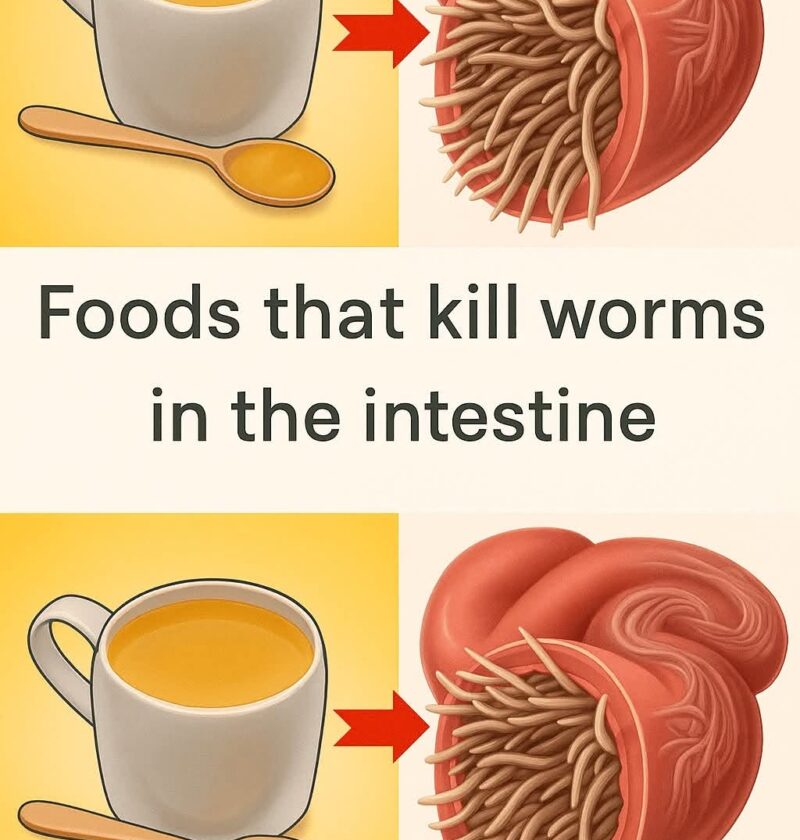
That headline is another clickbait “natural cure” claim, and it oversimplifies a real medical topic.
First, the reality
Intestinal worms (parasitic infections) are medical conditions that usually require proper diagnosis and medication, not specific foods.
Common parasites include roundworms, pinworms, and tapeworms—these are treated with antiparasitic drugs prescribed by a doctor.
🧫 Do any foods “kill worms”?
There is no strong clinical evidence that any food alone can reliably kill intestinal worms in humans.
Some foods are often claimed online to help, such as:
- Garlic
- Pumpkin seeds
- Papaya seeds
- Carrots
- Coconut
- Turmeric
- Probiotic foods (like yogurt)
What’s true about them?
Some of these may:
- support gut health
- mildly affect parasites in lab studies or animals
- help digestion or immunity
But they are not a substitute for treatment and do not reliably eliminate infections in humans.
💊 What actually works
If someone has intestinal worms, doctors typically use:
- Albendazole
- Mebendazole
- or other antiparasitic medications depending on the parasite
These are proven and fast-acting compared to food-based claims.
⚠️ When to suspect a worm infection
Possible signs include:
- abdominal pain or bloating
- unexplained weight loss
- itching around the anus (especially at night)
- visible worms in stool (in some cases)
But symptoms can overlap with many other conditions.
Bottom line
Foods may support gut health, but they do not reliably “kill worms.” If an infection is suspected, medical treatment is the safe and effective option.
If you want, I can also explain how people actually get intestinal worms and how to prevent them safely.