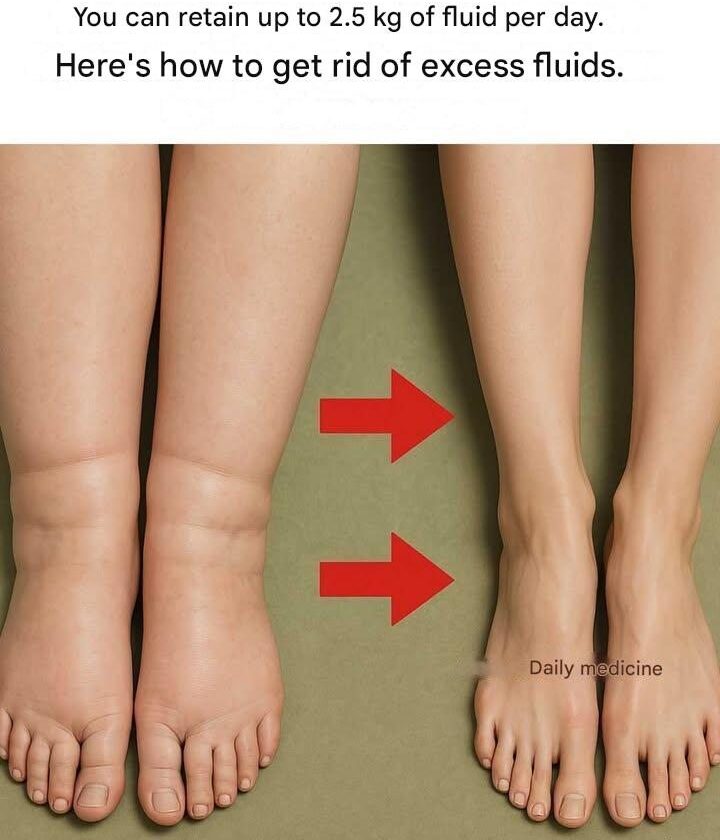
The claim “you can retain up to 2.5 kg of fluid per day” is exaggerated in most everyday contexts. Your body does constantly shift water balance, but large, rapid swings in “water weight” usually happen only in specific situations (high salt intake, hormonal changes, certain medications, kidney/heart issues, etc.), not as a universal daily rule.
Why water retention happens
Your body holds onto fluid mainly due to:
- High sodium (salt) intake
- Carbohydrate changes (glycogen stores hold water)
- Hormonal shifts (especially in menstrual cycles)
- Prolonged sitting/standing (fluid pooling in legs)
- Certain medications
- Dehydration (paradoxically causes retention)
Safer, realistic ways to reduce mild water retention
These are general, everyday approaches—not quick fixes:
1. Reduce excess salt
Packaged foods, snacks, and fast food are the biggest sources.
2. Drink enough water
When you’re dehydrated, the body tends to hold onto fluid.
3. Move regularly
Walking or light activity helps circulation and reduces swelling in legs.
4. Balance potassium intake
Foods like bananas, spinach, and lentils can help counter sodium effects.
5. Limit very processed carbs temporarily
Large carb swings can temporarily increase water storage.
6. Sleep well
Poor sleep can affect hormones that regulate fluid balance.
7. Elevate legs if swollen
Helpful if swelling is from standing or sitting long hours.
When to take it seriously
Mild daily fluctuations are normal, but you should get checked if you notice:
- Sudden or persistent swelling (especially one leg)
- Shortness of breath
- Chest discomfort
- Rapid unexplained weight gain over a few days
These can signal medical issues involving the heart, kidneys, or circulation.
If you want, tell me what made you curious about this (dieting, bloating, gym weight changes, etc.), and I can tailor the explanation to your situation.