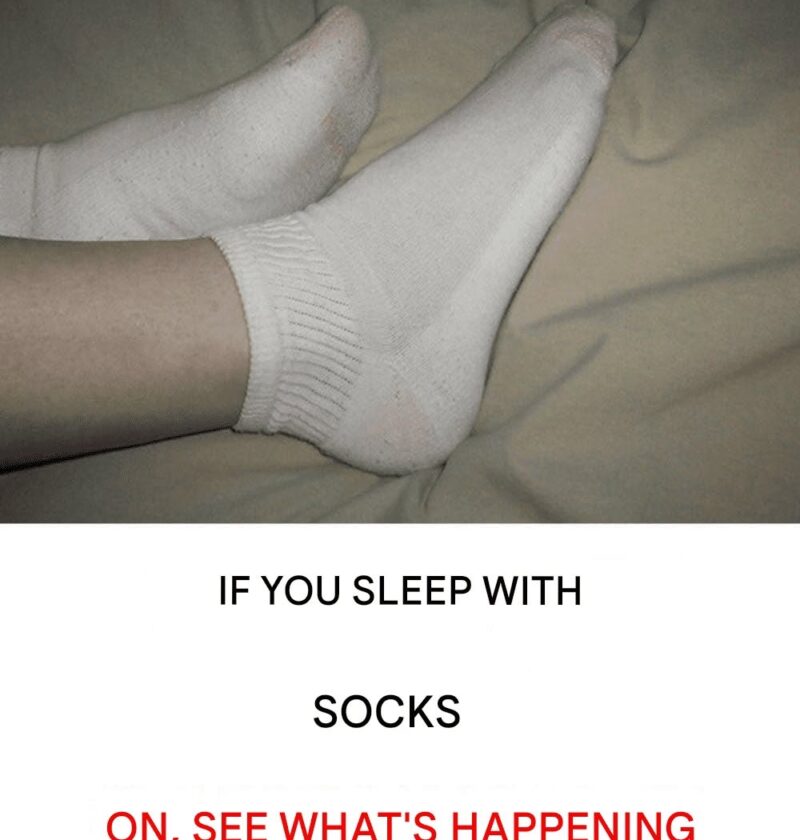
That headline is a bit oversimplified, but it’s based on a real point: many older adults benefit from keeping their feet warm and protected at home.
There’s no rule that “all seniors must wear socks,” but for some people it can help with comfort, circulation, and safety.
🧦 Why socks can help older adults
🌡️ 1. Better temperature control
As people age, circulation in the extremities can slow down.
Blood circulation
Wearing socks can help:
- keep feet warm
- improve comfort in cold environments
- reduce nighttime discomfort
🦶 2. Protection from injuries
Bare feet increase risk of:
- small cuts or scrapes
- stepping on sharp objects
- skin irritation
Socks act as a simple protective layer.
🧊 3. Fall prevention (indirectly)
Cold or numb feet can reduce balance awareness in some people.
Non-slip socks can help reduce slipping on smooth floors.
🩺 4. Helps certain medical conditions
People with conditions like:
- diabetes
- peripheral artery disease
- neuropathy
Peripheral neuropathy
may have reduced sensation in their feet, so socks can:
- prevent unnoticed injuries
- reduce pressure or friction
😴 5. May improve sleep quality
Some people fall asleep faster when their feet are warm because it helps regulate body temperature.
⚠️ When socks may NOT be helpful
- If they are too tight (can restrict circulation)
- If feet are sweaty (can increase fungal risk)
- If the person has skin infections that need airflow
🧠 Bottom line
Socks at home aren’t a medical requirement for seniors, but they can be helpful for warmth, comfort, protection, and safety—especially in people with circulation or nerve issues.
If you want, I can also explain:
- best socks for seniors (non-slip, diabetic-friendly, etc.)
- or when cold feet could signal a health problem instead of normal aging