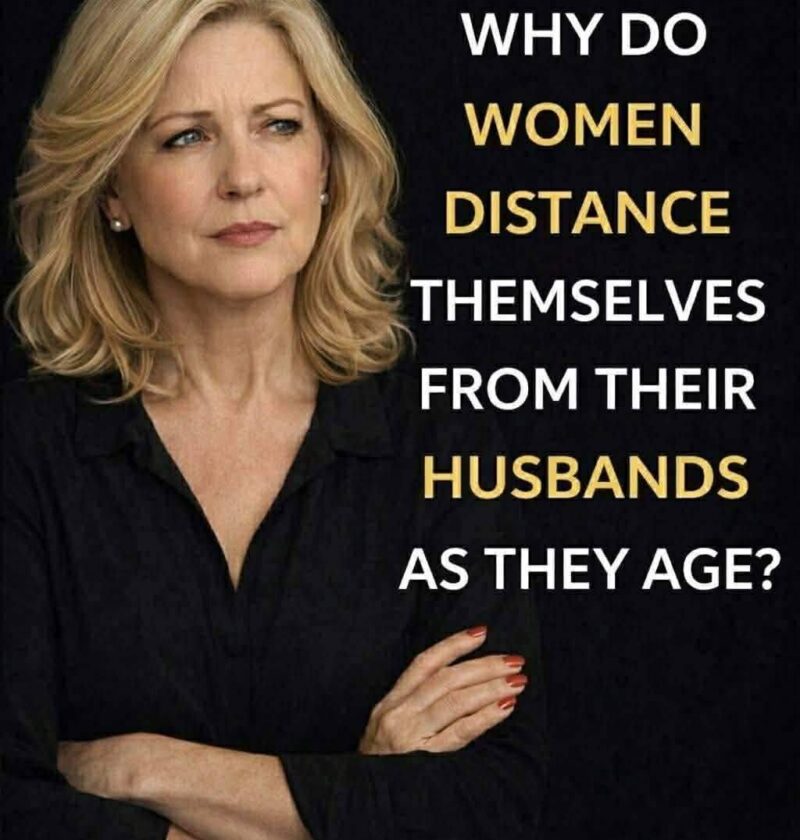
That headline is a broad generalization and not a real “rule” about aging or relationships. Women do not universally distance themselves from their husbands as they age—relationships vary widely depending on personality, health, communication, and life circumstances.
What can happen in some long-term marriages is a shift in dynamics, and there are several realistic reasons for that:
🧠 Possible reasons some couples feel distance over time
1. Life stress and routine overload
- Work, finances, caregiving, and health issues can reduce emotional energy
- Couples may become “task-focused” instead of emotionally connected
2. Unresolved communication issues
- Small misunderstandings over years can build up
- If feelings aren’t expressed, emotional distance can grow
3. Hormonal and life stage changes
- Menopause or aging-related changes can affect mood, energy, and sleep
- These are biological shifts, not personality changes
4. Retirement transition
- Spending much more time together after retirement can require adjustment
- Couples may need to rebuild shared routines
5. Emotional needs evolving
- With age, people often reassess priorities, friendships, and independence
- This doesn’t mean “distance,” but changing expectations
🚫 What this does NOT mean
- It’s not a gender-specific pattern
- It’s not inevitable with aging
- It’s not a sign of failure or loss of love by default
Many couples actually report:
- Greater companionship in later life
- More emotional stability
- Stronger bonding after children leave home
🧩 Bottom line
Distance in relationships is not about “women aging away from husbands”—it’s usually about communication, life stress, and changing life stages affecting both partners.
If you want, I can break down common relationship changes after 50 and how couples successfully stay emotionally close, which is much more useful than viral “women vs men” claims.