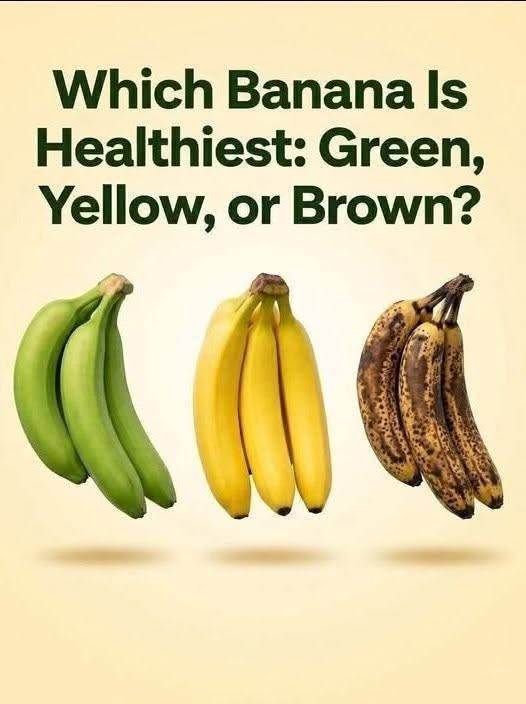
This is the kind of headline that often oversimplifies nutrition. The truth is that there isn’t one single “healthiest” banana—different stages of ripeness have different advantages.
Green (unripe) bananas
- Higher in resistant starch, which acts somewhat like fiber.
- Cause a slower rise in blood sugar.
- May help you feel full longer.
Yellow bananas
- A good balance of starch and natural sugars.
- Easy to digest.
- Rich in potassium, vitamin B6, and vitamin C.
Yellow bananas with brown spots
- Starch has mostly converted to sugars, making them sweeter.
- Easier to digest for many people.
- Still provide similar vitamins and minerals.
So which is “best”?
- For slower digestion and steadier blood sugar: greener bananas.
- For general nutrition and convenience: yellow bananas.
- For easy digestion and sweetness: spotted ripe bananas.
What doesn’t change much
Regardless of color, bananas remain a good source of:
- Potassium
- Vitamin B6
- Fiber
- Carbohydrates for energy
The healthiest banana is usually the one that fits your needs and that you’ll actually eat. Headlines claiming that one specific color or variety is dramatically healthier than all others are usually exaggerating the differences.