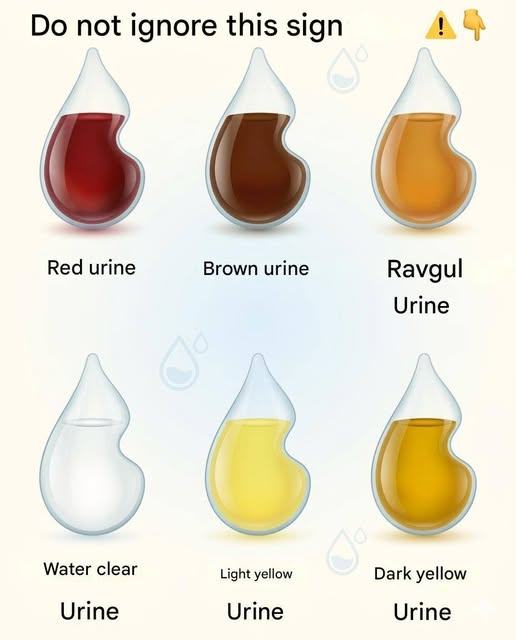
Urine color can give useful clues about hydration and sometimes health, but it’s not a diagnosis on its own. Many changes are harmless and temporary.
Here’s a clear breakdown:
💧 1. Clear urine
- Usually means very well hydrated
- Sometimes means you’re drinking too much water (rare concern if constant)
💛 2. Light yellow (straw color) — ideal
- Normal, healthy hydration level
- This is what most people should aim for
🌼 3. Dark yellow / amber
- Most common sign of dehydration
- You may need more fluids, especially in hot weather or after exercise
🟠 4. Orange urine
Possible causes:
- Dehydration (stronger concentration)
- Certain medications or vitamins (especially B-complex)
- Sometimes liver or bile issues (rare, especially if persistent)
If it continues + you notice yellowing of eyes/skin, that needs medical attention.
🩷 5. Pink or red urine
This can look alarming and should not be ignored.
Possible causes:
- Blood in urine (infection, kidney stones, or irritation)
- Foods like beetroot or berries (harmless)
- Certain medications
If not food-related, it should be checked.
Related condition doctors consider: Kidney disease
🟤 6. Brown / cola-colored urine
- Could be severe dehydration
- Muscle breakdown (after extreme exercise)
- Liver-related issues (in some cases)
Needs medical evaluation if persistent.
🟢 7. Blue or green urine (rare)
- Usually due to medications, dyes, or supplements
- Rarely infection with specific bacteria
⚠️ When to worry
See a doctor if you notice:
- Blood (red/pink) not explained by food
- Brown urine lasting more than a day
- Pain, burning, fever, or back pain
- Persistent unusual color changes
🧠 Simple takeaway
- Pale yellow = healthy
- Dark = drink more water
- Red/brown (not food-related) = get checked
If you want, I can also explain how urine changes with diabetes, kidney problems, or dehydration in detail in a simple way.