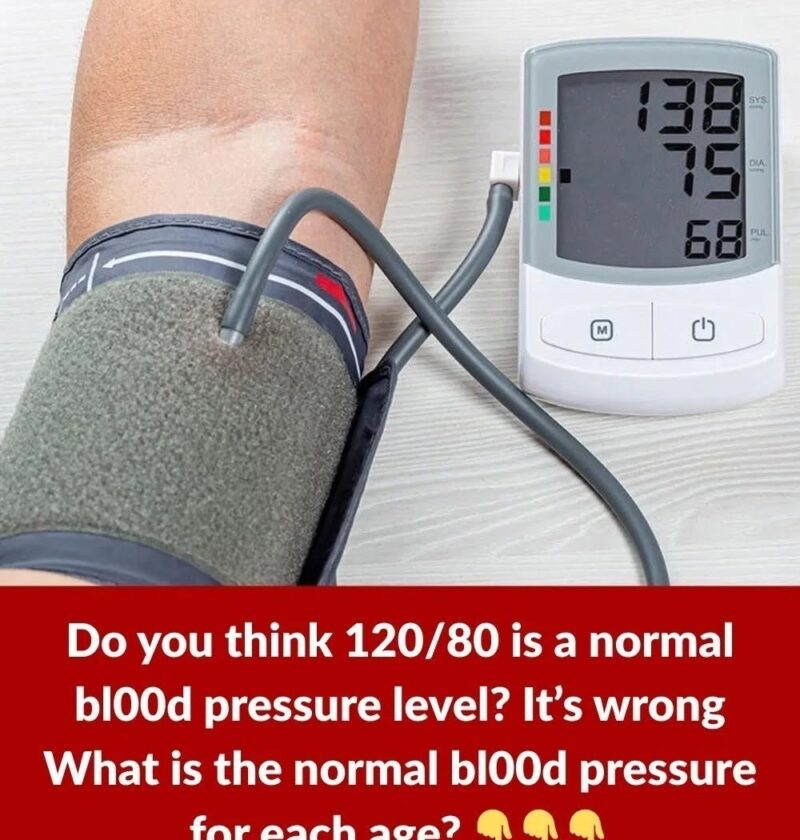
Blood pressure doesn’t have a perfect “fixed number for each age,” but it does follow general patterns. Doctors actually judge it based more on ranges and percentiles (for kids) rather than a single exact value.
Here’s a simple, easy guide:
🧒 Children (1–12 years)
Blood pressure changes a lot with height and age.
Typical range:
- Around 90/55 to 110/70 mmHg
👉 Doctors use growth charts, not one fixed number.
🧑 Teenagers (13–18 years)
Starts becoming closer to adult values:
- About 100/60 to 120/80 mmHg
- Ideal is usually around 110/70
🧑⚕️ Adults (18–60 years)
This is the standard reference range:
- Normal: less than 120/80 mmHg
- Elevated: 120–129 / less than 80
- High (Hypertension): 130/80 or higher
👴 Older adults (60+ years)
Slightly higher readings can be more common:
- Often considered acceptable: up to ~130–139 / 80–89
- Still, ideal is usually below 130/80 if healthy
❤️ Key takeaway
- “Normal” is not one exact number for everyone
- Below 120/80 is generally considered healthy for most adults
- Doctors care more about consistent trends, not a single reading
⚠️ When to pay attention
- Consistently above 130/80 → may need medical advice
- Below 90/60 with symptoms (dizziness, fainting) → could be low BP issue
If you want, I can also explain:
- what causes high/low BP
- or how to check blood pressure correctly at home (most people do it wrong)