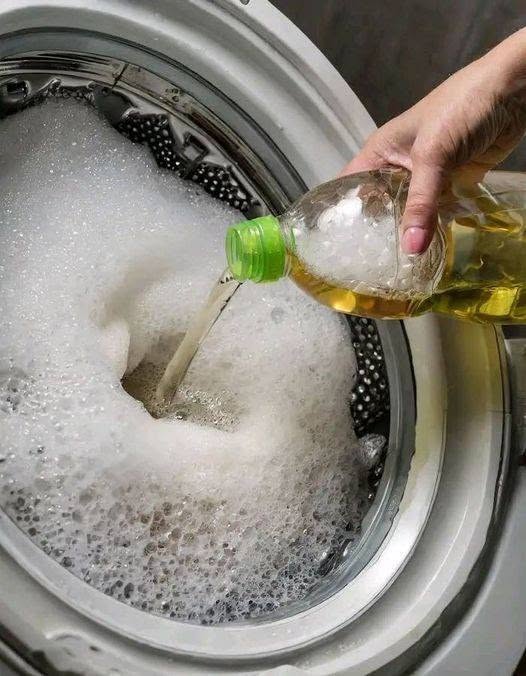
That headline is partly true, but exaggerated in typical “laundry hack” style.
Vinegar can help with laundry—but it’s not a miracle whitener, and it must be used correctly.
🧺 What vinegar actually does in laundry
White vinegar can:
- help remove detergent residue
- reduce odors
- soften fabrics (by breaking mineral buildup)
- slightly brighten dull whites over time
But it does not truly “bleach” clothes like chemical whitening agents.
⚠️ The “most people use it wrong” part
The biggest mistake is mixing vinegar with bleach or using it in the wrong cycle.
❌ Never do this:
- Mix vinegar with bleach → produces toxic chlorine gas
- Pour vinegar directly onto dry fabric repeatedly → can weaken fibers over time
- Replace all detergent with vinegar → clothes won’t be properly cleaned
🧼 The correct way to use it
✔️ For softer towels
- Add ½ cup vinegar to the fabric softener compartment
- Run a normal wash cycle
- Use every few washes, not necessarily every load
✔️ For whitening boost
- Pre-soak whites in warm water + 1 cup vinegar for 30–60 minutes
- Then wash with regular detergent
✔️ For odor removal
- Add vinegar during rinse cycle (not wash cycle)
🧠 Important reality check
Vinegar is:
- safe in small laundry amounts
- helpful for buildup and odor
- NOT a replacement for detergent
- NOT a strong whitening agent
For truly bright whites, oxygen-based bleach or proper detergents are more effective.
🧾 Bottom line
Vinegar can improve softness and freshness in laundry when used correctly, but viral posts exaggerate its power. It’s a helpful laundry aid, not a miracle whitener, and safety matters—especially avoiding mixing it with bleach.