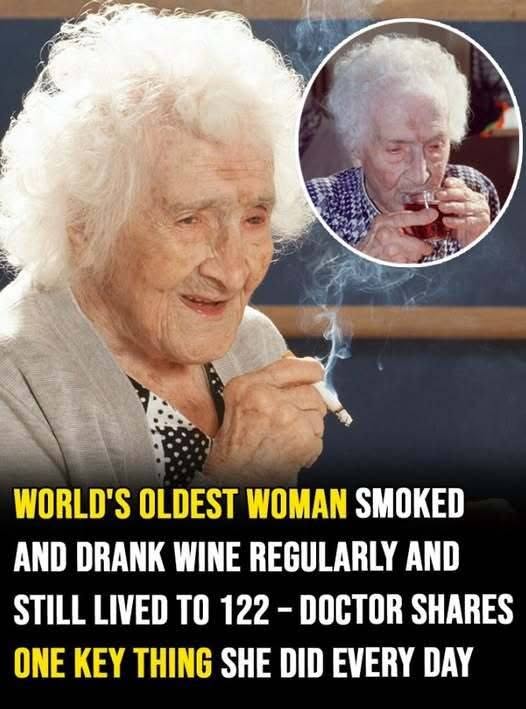
That headline is referring to Jeanne Calment, the longest-confirmed human lifespan on record (122 years, 164 days). Stories about her are real—but the “surprising habits” part is often exaggerated or oversimplified.
👵 Who she was
Jeanne Calment
She lived in France and remains the only fully verified person to reach 122 years.
🧠 What actually helped her longevity (based on documented reports)
1. 🥗 Simple, moderate eating
- No strict diet rules
- Ate a traditional French diet (vegetables, olive oil, occasional treats)
- Reportedly enjoyed chocolate regularly (in small amounts)
👉 Key point: not “perfect eating,” but consistency and moderation
2. 🚶♀️ Light, steady activity
- Walked regularly
- Stayed independent for much of her life
- Maintained daily movement rather than intense exercise
3. 🧘 Low stress lifestyle (later life especially)
- Lived in familiar surroundings
- Socially connected in her community
- No extreme lifestyle pressures in old age
4. 🧬 Strong genetics (huge factor)
Longevity research consistently shows:
genetics play a major role in extreme old age (especially past 100)
Lifestyle helps, but it does not fully explain 122 years.
🚬 Important myth correction
Some viral posts claim she had “secret habits” like:
- smoking regularly
- drinking wine daily
While she did smoke for part of her life, scientists are clear:
this does NOT make smoking healthy or a longevity strategy
She is an exception, not a model to copy in that regard.
🧠 What science actually concludes
Researchers studying supercentenarians generally find:
- No single “longevity trick”
- Strong mix of genetics + moderate lifestyle + low chronic stress
- Avoidance of major disease earlier in life
⚖️ Bottom line
Jeanne Calment didn’t follow a miracle routine. Her life shows:
longevity is usually a combination of genetics, steady habits, and good fortune—not secret hacks.
If you want, I can share what modern longevity research says about people who live past 90–100 today, which is more practical than celebrity-style stories.