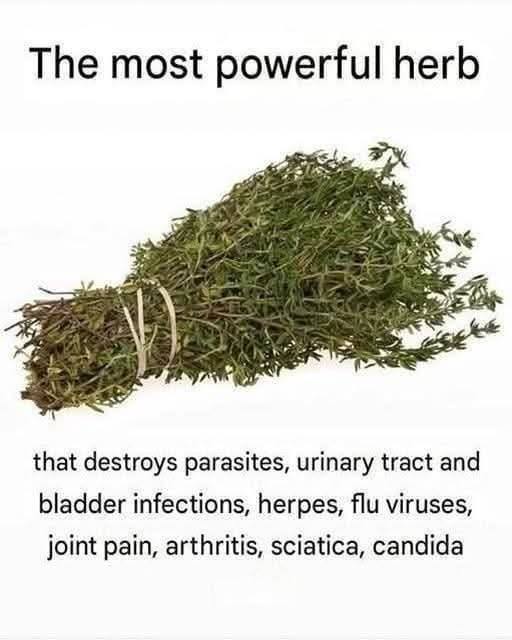
That headline is another example of overstated, clickbait health language. There is no single “most potent herb” that reliably “destroys parasites and urinary tract problems” in the way these posts usually imply.
What’s actually true
1. “Parasites”
Some herbs and plant compounds have mild antimicrobial or antiparasitic effects in lab studies, such as:
- Garlic
- Wormwood
- Black walnut
- Oregano oil
But:
- Human infections usually require proper medical diagnosis and prescription treatment
- Herbs alone are not reliable cures for parasitic infections
2. Urinary tract issues
Urinary tract infections (UTIs) are most commonly caused by bacteria. Evidence-based care includes:
- Appropriate antibiotics (when needed)
- Hydration
Some supportive options:
- Cranberry products may help reduce recurrence risk in some people
- D-mannose (supplement) has some evidence for prevention in specific cases
- Adequate fluids and urination habits
But again:
- Herbs are not a substitute for treating an active infection
Why these claims spread online
Headlines like this often:
- Mix traditional herbal use with exaggerated claims
- Rely on early lab research that doesn’t translate to real treatments
- Omit the need for medical diagnosis
When to be careful
Seek medical care if there are:
- Burning urination, fever, back pain (possible UTI or kidney infection)
- Ongoing digestive issues, weight loss, or fatigue (possible underlying condition)
Bottom line
Some herbs may support general health, but no herb reliably “destroys parasites and UTIs” as a standalone cure.
If you want, I can list evidence-backed natural ways to support urinary tract health safely, or explain how parasitic infections are actually diagnosed and treated.