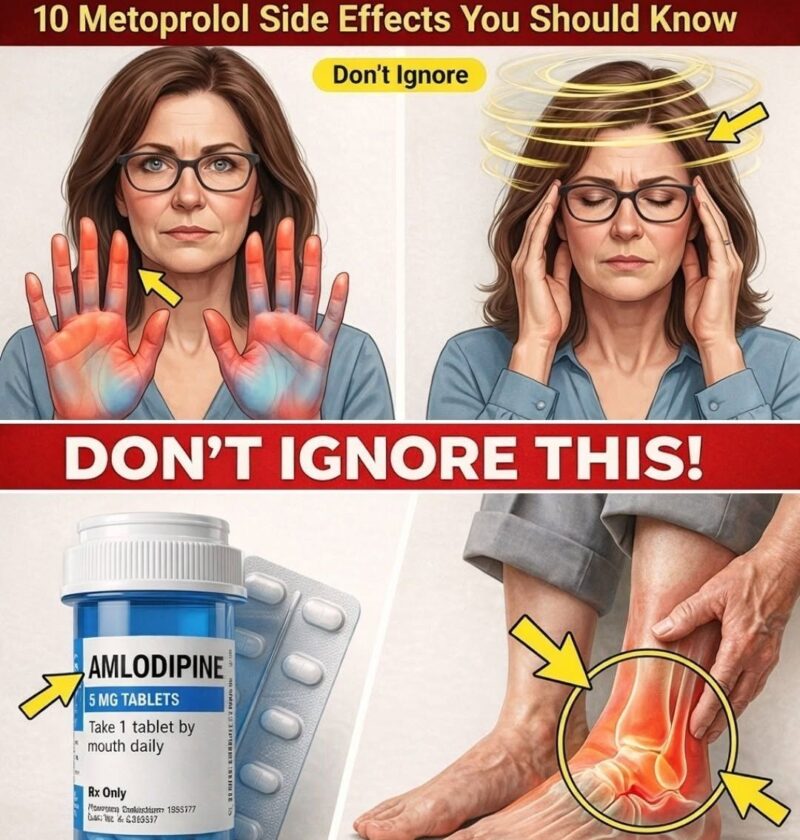
That headline is fear-based clickbait. It tries to make a common, well-studied medication sound secretly dangerous, which is misleading.
Metoprolol is widely prescribed and generally well-understood by doctors. Like all medicines, it can have side effects—but they are not “hidden secrets.”
🫀 Common side effects (fairly well-known)
😴 1. Fatigue or tiredness
Because it slows heart rate and reduces blood pressure.
🫀 2. Slower heart rate
Expected effect, but sometimes noticeable.
🧊 3. Cold hands and feet
Reduced circulation in extremities.
😵 4. Dizziness or lightheadedness
Especially when standing up quickly.
🍽️ Other possible side effects
🤢 5. Nausea or stomach discomfort
😴 6. Sleep disturbances or vivid dreams
😔 7. Low mood in some people
⚠️ Less common but important
🫁 8. Shortness of breath (especially in people with asthma or lung disease)
🩸 9. Very low blood pressure
💓 10. Excessively slow heart rate (bradycardia)
🚨 When to seek medical advice
You should contact a healthcare provider if you experience:
- severe dizziness or fainting
- very slow pulse with symptoms
- worsening breathing problems
- extreme fatigue affecting daily life
🧠 Important reality check
- These are known, monitored side effects, not hidden dangers
- Doctors prescribe metoprolol because its benefits (preventing heart attack, stroke, arrhythmias) often outweigh risks
- Most side effects are manageable or dose-related
🧾 Bottom line
Metoprolol can cause side effects like fatigue, dizziness, and slower heart rate, but the dramatic “doctors don’t want you to know” framing is misleading and exaggerated.
If you want, I can also explain how to tell normal side effects from dangerous ones in simple terms.